
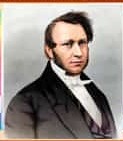
Birth: 30.01.1818
Home call: 18.08.1899
Native Place: Dublin, Ireland
Place of vision: India; Mexico
William Butler was an Irish Methodist missionary who is known for his ministry in India and Mexico. From his childhood, he was well appreciated by the church for his spiritual knowledge. But one day he visited a Methodist church where he realized that his spiritual knowledge won’t take him to heaven. That day he repented of his sins and invited Christ into his heart. Soon after, he obeyed Lord’s call for ministry and went to Boston in 1850 to minister in the Methodist church.
During this time, Dr. Durbin approached William asking him to minister in India. Nudged by the Holy Spirit, William arrived in Calcutta in 1855 along with his wife Clementina Rowe. It was the time when Kali Puja was being celebrated with pomp in Calcutta. That sight of dreadful idolatry further filled him with the burden for the Indians. From there, Butler moved to North India intending to establish a mission station at Bareilly, unaware of the rising Sepoy Mutiny.
At Bareilly, the British army told William that it would be madness to attempt missionary work in the current situation. But the heroic missionary said, “It is my duty to preach Sir; My master will take care of my life.” William began missionary work in Bareilly and Lucknow with the help of an interpreter called Joel. But after repeated warnings and orders, William went to Naini Tal for the safety of the believers.
After the suppression of the mutiny, William returned to Bareilly and continued the missionary work till 1865. Then the Butler couple had to return to America due to illness. There they vigorously promoted foreign missions. In 1873 William went to Mexico to establish the Methodist mission, which was later continued by his son John Butler for the next forty years.
In 1883, his burden for the Indians brought him back to India, but he could only stay for a couple of years due to failing health. After having served God for almost 50 years, Willam Butler went to be with the Lord in 1899.
