
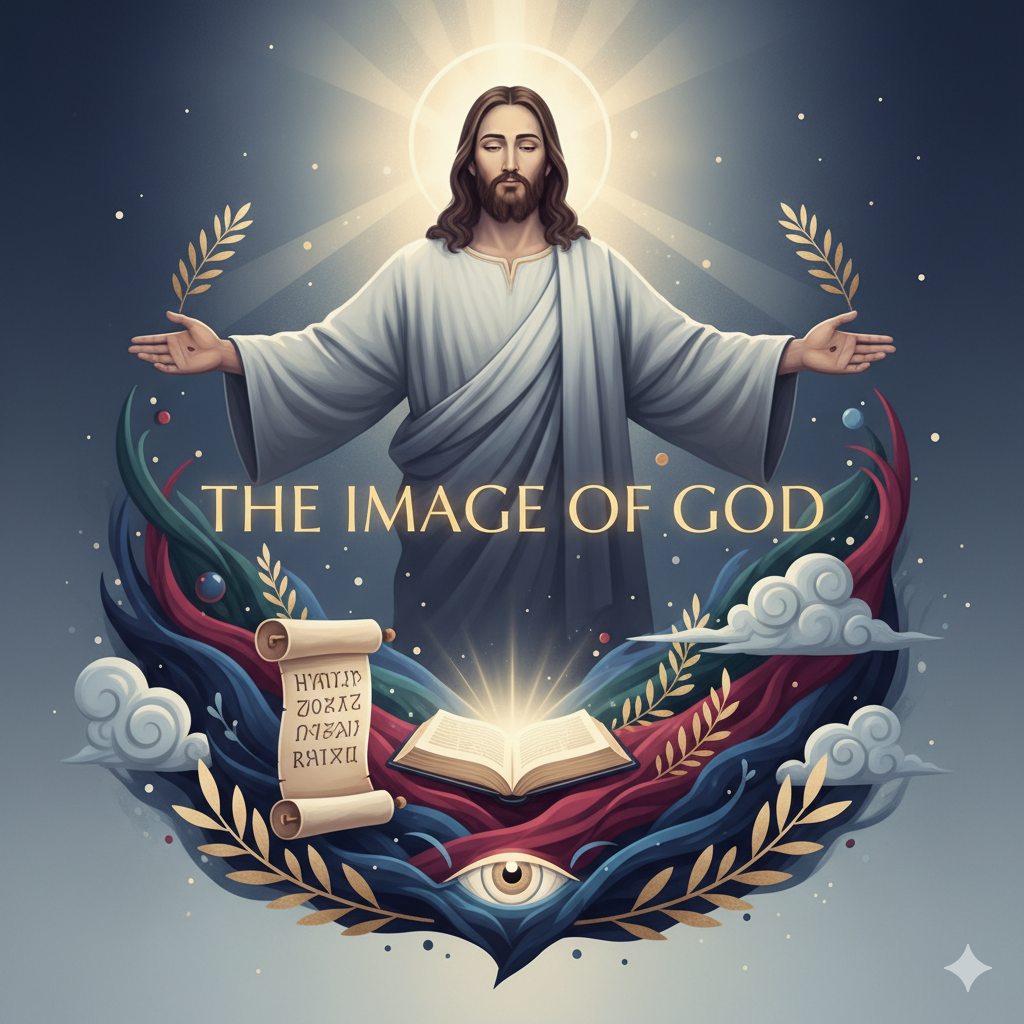
God created man in his present human form and man is the crown of God’s creation. He is unique with special qualities and nature, when compared to other creatures. The climax of God’s creative work is man. Man can think, decide, choose, feel, respond, remember and learn from mistakes. So the study of the image and the likeness of man will enlighten more about man. It will enable one to learn more of the wisdom and the power of God in creation.
1. What is the image of God?
The Bible teaches that God created man in His own image and likeness (Gen. 1:26) and breathed into him the breath of life (Gen. 2:7). Man possesses moral and spiritual nature with intellect, emotions and will. These are due to the distinctions in man. What is meant by the fact that man was made in the image of God and in His likeness?
The word ‘image’ means the shadow or outline of a figure. The ‘likeness’ refers to the resemblance of that shadow to the figure. The words ‘image’ and ‘likeness’ may represent God’s resemblance (likeness) imparted to man at creation. The Hebrew word for image is selem which means ‘shadow’. This word is used in five places in the Old Testament when referring to people. In those five places this word is used to designate an idol which is shaped in the form of a man. So image means the ‘shadow of God’ and it may refer to the features like human knowledge, moral awareness, original moral perfection and immortality as believed traditionally.
The Hebrew word used for likeness is d’mooth meaning ‘likeness.’ It may refer to the similarity of man to God in his potentiality. It is used to explain something by referring to something else which is like that. Man is made in the likeness of God. So man is God-like in certain features about which we cannot say definitely. It is a mystery.
2. The Meaning of the Image of God
a. Image or likeness does not refer to physical likeness, because God is Spirit. He cannot pass on His physical likeness and image to man.
b. It does not refer to moral excellence because man is said to have the image of God (Gen. 9:6) and the likeness of God (James 3:9) after his fall.
c. It does not refer to man’s authority over all creatures because it was given separately (Gen. 1:26).
So it can only be an inner nature of human being which reflects something from God and certain qualities which make man a person. It can be his intellectual, emotional and moral qualities. Some others say that man has special capacities, creativity and potentialities than animals. These potentialities with the moral power of freedom of choice and man’s natural response to God’s love are the likeness that man received from God. His qualities are transmitted to succeeding generations by reproductive process (Gen. 5:1-3).
3. Effect of the Fall on the Image of God in Man
Many church leaders have expressed different views about the effect of fall on the image of God in man. A study on these views will enlighten us with a deeper understanding on the truth of the image of God and the fall.
a. Irenaeus
Irenaeus, a second century Bishop and theologian said that only the ‘likeness’ was lost in the fall. He identified ‘image’ with human reason and moral freedom. He considered ‘likeness’ as the original righteousness which man received from God. So at fall man lost his original righteousness (likeness) and not His image (human reason and moral freedom).
b. Martin Luther
Martin Luther, the German reformer, considered that ‘image’ and ‘likeness’ were synonyms because these words have been used in Genesis 1:26 as Hebrew parallelism. He said that the image was lost in the fall. It can be got back only through accepting Jesus as Lord and Saviour (regeneration).
c. Calvin
Calvin said that the image of God was not completely lost in the fall. Part of God’s image was present in man even after his fall. This is supported by statements in the Bible where fallen man is mentioned to have the image and likeness of God (Gen. 9:6; 1 Cor. 11:7; James 3:9).
4. Perfect Example for the Image of God
Jesus Christ is the perfect example of the image and likeness of God. The Greek word used for image is eikon which means ‘representation.’ Jesus had this exact representation (image) of God. (2 Cor. 4:4; Col. 1:15; Heb. 1:3). That is why Jesus said to Philip, “He who has seen Me has seen the Father” (John 14:9), when he asked Jesus to show the Father.
The Bible does not say that Jesus was in the image of man. This is because Jesus was fully man. Jesus was fully God and so the Bible does not say anywhere
that Jesus was in the likeness of God. But the Bible does say that Jesus was like His brothers, in the likeness of sinful man (Rom. 8:3) and in human likeness (Phil. 2:7). So Jesus Christ was the image of God and He had the likeness of man and hence He became the model for understanding the image and likeness that
man received at creation. 5. Mankind’s Response to the Likeness – Image Concept of Man
The teaching that man is made in the image of God gives man a special status among God’s creatures. Having been created in the image of God, man has to respond rightly to the privileges that he enjoys in the following ways.
2. Regain the lost image and likeness of God
When God created man in His own image and likeness, He gave man a dignity and a status that made his relation to God unique among all creatures (Ps. 8:3-8; Matt. 10:31; 12:12). God gave man freewill and independence. But Adam disobeyed God and lost the image of God. As children of Adam, all people in this world have lost the image of God. This is because Adam had passed on the lost image of God to all those who descended from him.
To enable man to regain this lost image and likeness, Jesus Christ who was the image of God, came to this world. By His life, death and resurrection, Jesus undid the effect of Adam’s disobedience (Rom. 5:12-20). Now Christ can help all those who have lost the image of God. He shares the image of God to all those who by faith acknowledge Him as the Lord and Saviour (Rom. 8:29). Regeneration helps one to regain the lost image of God. Those who bear God’s image fully are those who are united with Christ.
b. Renewal of the image and likeness of God
In regeneration, a man can regain the lost image of God. But it is something that he must continue to work daily. He will get the full image of God only in the second coming of Jesus Christ (1 Cor. 15:49; 2 Cor. 3:18; Col. 3:10; 1 John 3:2). This is the reason why the Bible teaches that we have to be renewed in knowledge in the image of the Creator (Col. 3:10). God works with His children through His Spirit. Those who obey the Lord will be renewed into His likeness (2 Cor. 3:18) and when Jesus comes, “we will be like Him, for we shall see Him as He is” (1 John 3:2).
c. Remaining grateful for the image of God The Bible says that God gave man a place of unique responsibility on the earth to rule and subdue it. He is also privileged to possess God’s likeness and image. When man sinned and lost the image, God sent Jesus Christ to enable man to regain the lost image. Is this not a unique blessing for the children of God? Remain grateful and thankful like the Psalmist who said, “What is man that You are mindful of him,… You have made him a little lower than the angels and crowned him with glory and honor. You made him ruler over the works of Your hands. You have put all things under his feet” (Ps. 8:4-6
