
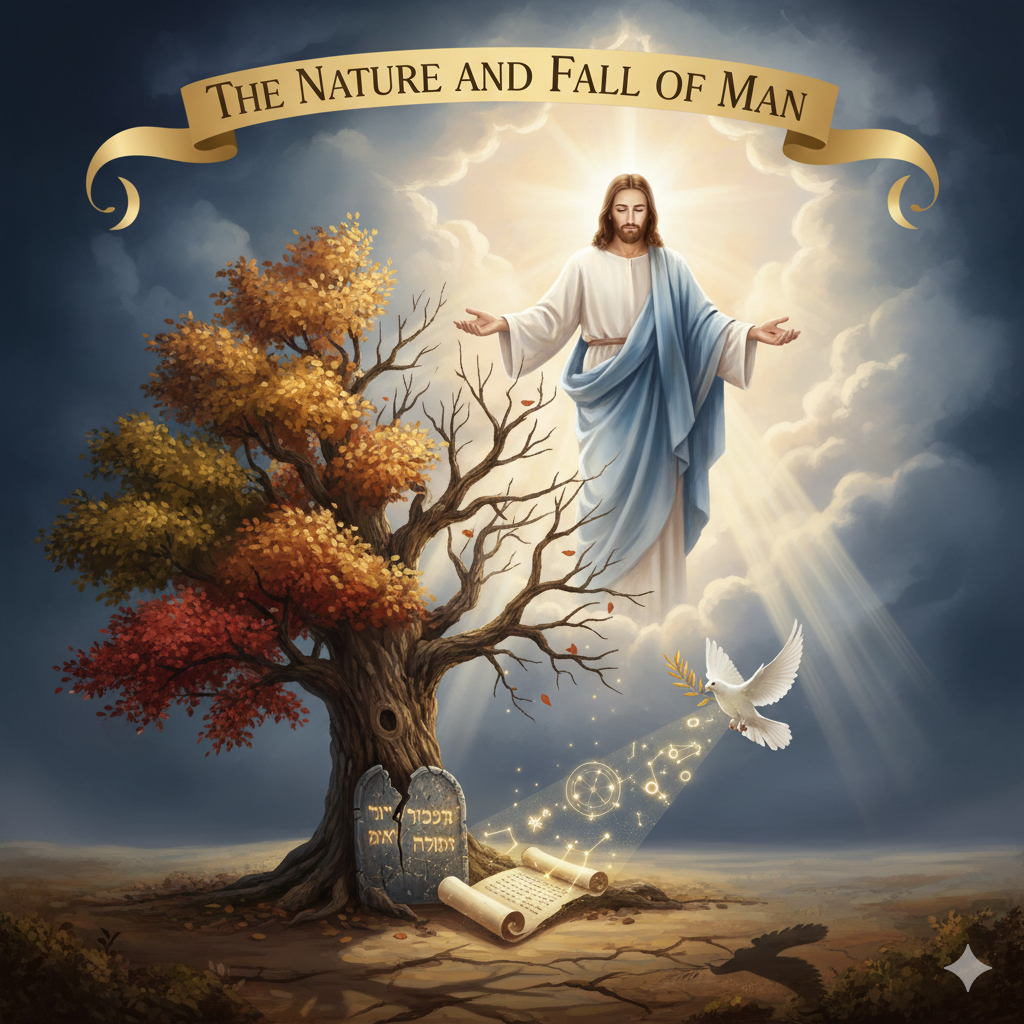
The Bible describes the nature of man when he was formed by God in Genesis 2:7. The body was formed fimt from the dust, “And the Lord God formed man of the dust of the ground, and breathed into his nostrils the breath of life, and man became a living being” (Gen. 2:7). This verse gives the constitution of man. Man is made up of three parts and they are.
The body of man formed from the dust
The spirit breathed into man’s nostrils by the Lord
The soul-and man became a living being
1. The Constitution of Man
There has been a debate over whether man consists of body, soul, spirit (trichotomy) or body and soul (dichotomy). Let us study from the Scripture the right constituents of man.
a. The Dichotomous theory
This theory teaches that man is made up of soul (spirit) and a body, and he is dual in nature. This theory holds that the spirit and soul are one entity and the two terms are synonymous and interchangeable. So they say that man is made up of body and soul.
Many people have supported this theory including John Wesley. He said that man is dichotomous before regeneration but trichotomous after regeneration because man receives the Holy Spirit at regeneration. Theologically it is wrong to ‘possess’ God as a part of man.
Does this theory have Scriptural support? Dicotomists say that the terms:
i. Soul and spirit are used interchangeably in the Bible in many places.
Genesis 41:8-‘his spirit was troubled’
Psalm 42:6-‘my soul is cast down’
John 12:27-‘Now My soul is troubled’
John 13:21-‘He was troubled in spiriť
ii. Soul and spirit are used synonymously
Death is giving up the soul (Gen. 35:18).
Death is giving up the spirit (Ps. 31:5).
Dead are called as spirits (Heb. 12:23).
Dead are called as souls (Rev. 6:9).
iii. Soul and spirit are used in parallelism
My soul magnifies the Lord, And my spirit has rejoiced (Luke 1:46, 47).
iv. Soul and spirit are attributed to immature part of man.
‘His spirit may be saved in the day of the Lord.’ (1 Cor. 5:5)
‘What will it profit a man… loses his own soul.’ (Mark 8:36, 37)
b. The Trichotomous theory
This theory says that man is made up of three parts, and they are spirit, soul and body. This theory is different from the dichotomous theory in the fact that the spirit and the soul are divisible and are present in the body. This theory is supported by the following passages.
i. Hebrews 4:12: ‘For the word of God is living and powerful,…. piercing even to the division of soul and spirit.’
ii. 1 Thessalonians 5:23: “May the God… sanctify you completely; and may your whole spirit, soul, and body be preserved blameless.
2. Information about Man’s Being
The Bible teaches that man is made up of spirit, soul and body. Here is more information about man’s being.
a. The spirit of man
The spirit in a man gives him God consciousness, the capability to communicate with God. Man obtained this spirit when God breathed into the nostrils of Adam. This spirit assures us our salvation (Rom. 8:16) and goes to God at death (Ecc. 12:7).
When Adam fell, the spirit of man lost contact with God and at new birth man’s spirit is born again (Rom. 8:16). Through the spirit we worship God (John 4:24).
b. The soul of man
The soul is the subconscious part of man. It helps a person to know oneself. Man received the spirit and soul when God breathed into the body of Adam. The Bible says that the soul can be saved (James 1:21), punished (Luke 16:23) and its redemption is precious (Ps. 49:8). The soul is the central part of man. It binds the body and spirit together in triunity. The soul belongs to God (Ezek. 18:3, 4), possesses immortality (Matt. 10:28) and leaves the body at death (Gen. 35:18). The souls of the righteous are kept by God (Ps. 121:7) but that of the wicked will be punished (Rom. 2:9).
What is the origin of the soul? There are three theories on the origin of the soul.
i. Theory of pre-existence: This theory states that the souls enter the human body at the time of conception. This has no support from the Bible.
ii. Theory of creation: This theory suggests that God creates the soul in the womb of women after conception. The person receives the body from parents and the soul from God. This could not account for the character traits and the sinful nature of man.
iii. Theory of traditionalists: This theory is biblical and it holds the view that the soul and the body are formed in man due to natural reproduction. This accounts for the sinful nature in man which is from his parents at conception. God gives the spirit and the child receives the soul and body from the parents.
. The body of man
The body of man is the world conscious part of man. It helps man to know and receive things from around him. This body was formed from the dust and will go to the dust after death. The body of man has five senses sight, hearing, taste, touch and smell.
The Bible describes the human body as a house (2 Cor. 5:1), tabernacle (2 Cor. 5:1-4), temple (1 Cor. 3:16), house of clay (Job 4:19), earthen vessel (2 Cor. 4:7). tent (2 Pet. 1:13) and member of Christ (1 Cor. 6:15). The body is wonderfully made (Ps. 139:14) and bears God’s image (Col. 3:10). It is subject to death (Rom. 5:12) and the instrument of evil (Rom. 1:24-32). It will be redeemed (Rom. 8:23), raised (John 5:28, 29), changed (Phil. 3:21) and glorified (Rom. 8:29, 30).
3. The Unity of the Person
Man is widely believed to have spirit, soul and body. Other immaterial parts
of man are
The heart of man (Ex. 7:23; Ps. 37:4; Rom. 9:2; Eph. 3:17).
The mind of man (Rom. 1:28; 2 Cor. 4:4; Titus 1:15).
The renewed mind (Matt. 22:37; Rom. 12:1, 2).
In these days, the issue of dichotomy and trichotomy is not given much importance. People give importance to the unity of the person. The Bible says that man is a psychosomatic unity. The parts of man like spirit, mind, soul, heart and body are different ways of looking at a person. Man can be called a unity since the word used in Greek psyche and in Hebrew nephesh can be translated to refer to the whole person (Acts 27:37; Josh. 10:28f).
4. The Fall
The act of disobedience of Adam and Eve to God and its consequences on the earth and man is usually called as the fall. This actual fall of man into sin is recorded in Genesis 3. The fall explains how sin entered the world. There are some scholars who question the validity of the record of the fall in Genesis. The orthodox interpretation is that the event leading to the fall took place as it is recorded in the Scriptures. The results of fall are the moral depravity and the sinfulness of man.
a. The fall of Adam and Eve
God created Adam and Eve and put them in the Garden of Eden. He also gave Adam and Eve the freedom of choice. They could either obey God or disobey Him. God planted the tree of knowledge of good and evil and commanded them not to eat the fruit. Satan came to Eve as a serpent when she was alone. Satan tempted Eve through her appetite and desire for food. He raised doubts in the mind of Eve by asking, ‘Has God indeed said? He enticed her by saying that she will know good and evil after eating the fruit.
Eve stood near the tree, the place of temptation. She might have been admiring the fruit. She spoke with the devil. She looked at the tree and found it to be good for food and pleasant to the eyes. She desired after it, plucked it, ate it
and gave it to Adam. Adam ate and they both sinned. Thus siev entered the world because they ate the fruit of the forbidden tree.
b. The outcome of the fall
When Adam sinned, the human race fell with him. His ruin brought ruin to all his descendants as David said, “I was brought forth in iniquity, in sin my mother conceived me” (Ps. 51:5). David committed sin because of the sinful nature that he received from Adam, which is called as Adam’s original sin. Here are some immediate and long range effects on Adam’s fall.
Many changes took place in the life of Adam and Eve when they committed sin. These effects explain some of the spiritual and other problems of man.
i. Immediate effects (Gen. 3)
Lost their purity: They knew that they were naked’ (vs. 7).
Lost fellowship with God: Hid themselves from the presence of the Lord’
(vs. 8). Lost fellowship with others: The woman … gave me of the tree’ (vs. 12).
Fear of sin’s punishment arose: ‘I was afraid… I hid myself (vs. 10).
Got knowledge of good and evil: The eyes of both of them were opened’ (vs. 7).
Their conscience became sharp: ‘I was afraid because I was naked’ (vs. 10).
Fear of God arose: ‘I hid myself (vs. 10).
Began to blame others: ‘The woman whom You gave’ (vs. 12).
Whole nature of man became corrupted: Man’s soul, body and spirit were affected – hid themselves from the presence of the Lord (vs. 8).
Animal creation was cursed (vs. 14) and became hostile (vs. 15).
Physical pain started (vs. 16).
The land became hostile (vs. 17, 18).
Authority, tension and rank in marriage arose (vs. 16).
Physical death started (vs. 19).
Mankind was denied access to the tree of life (vs. 22, 24).
ii. Long range effects
All mankind was separated from God (vs. 24; Eph. 2:12)
Sin entered into the human race (Rom 3: 23; 5:12; Gal. 3:22)
Death entered into the human race (Rom. 5:12)
All inherited the guilt of Adam (Rom. 5:12)
All became condemned in Adam, and by their own sins(Rom. 3:23)
Spiritual death came (Rom. 8:6-9)
Penalty for sin arose (Rom. 6:23)
God’s judgment and eternal separation of man came (Rev. 20:11-15)
Became captive of Satan (2 Cor. 4:4)
The entire human nature was affected by sin-understanding darkened (Eph. 4:18), heart became wretched (Jer. 17.9,10), mind and conscience defiled (Gen.
6:5), flesh and spirit defiled, lost all God like qualities (Rom. 7:18)
Human character degenerated (Rom. 3:9)
Human history became blood thirsty, full of war and revenge and domination of one race over another arose due to desire for pleasure.
c. God’s remedy for the fall
When Adam sinned all mankind fell with him. Sin entered into mankind due to the fall and brought suffering. Man’s life on this earth became miserable due to inability to stop sinning, desire to do evil, love for pleasure, suffering and death. The earth also became corrupt. The nature of man’s ruin is seen in the spiritual depravity of man leading to spiritual wickedness (Rom. 1:17-23) and moral depravity of man, like ‘uncleanness, the lusts of their hearts, to dishonour their bodies among themselves’ (Rom. 1:24-32).
As a remedy for man’s sins, God sent ‘His only begotten Son’ (John 3:16). He came into this sinful world through Virgin Mary. He was sinless because He had no human father. In all points He was tempted ‘as we are, yet without sin (Heb. 4:15). Jesus was sinless (2 Cor. 5:21) and in Him there was no sin (1 John 3:5). He gave His life as ‘a ransom’ for many (Mark 10:45) and paid the debt of sin with His life (Rom. 6:23). God’s remedy for the fall of man was the price He fully paid as penalty on the cross of Calvary for the sin of the world (John 1:12, 29, 1 John 2:2).
In Adam, all people died and sin entered the world (Rom. 5:12); died spiritually (Rom. 8:6-9) and came under God’s wrath (Rom. 6:23). But in Christ, all believers are made alive (Eph. 2:5; 1 Cor. 15:20-23). In Adam, all were ruined through the fall (Rom. 5:12) but in Christ, all became new creation (2 Cor. 5:17). In Adam, all were separated from God by sin (Gen. 3:24) but in Christ, all those who put their trust in God will be redeemed from sin and ruin (Gal. 3:13).
d. The results of God’s remedy
God’s remedy for sin and death of man brought the following blessings to mankind.
i. Redemption: God’s remedy for fallen mankind is redemption through the precious blood of Jesus Christ, a Lamb without blemish and without spot (1 Pet. 1:19). It is not through good works, to avoid boasting, and also not through any other means but through His ‘only begotten Son’ Jesus Christ who died for us on the cross for our sin. Man is redeemed now by believing that Christ died for his sins buried and rose again on the third day (1 Cor. 15:3, 4).
ii. A new creation in Jesus Christ: Because of the work of Christ on the cross,
man can be saved by grace through faith (Eph. 2:1-7). He becomes a new creation in Christ (2 Cor. 5:17) and is born anew as a child of God.
iii. Glorious future for the redeemed: Jesus had gone to prepare a place for His children, redeemed by His blood, and will come again to take them back (John
14.2, 3). He will take the redeemed to an eternal place called heaven, Da. 65(12) where all the effects of sin and fall will not be present (Rev. 21:4, 7, 8). Thery will reign with God forever and ever (Rev. 22:45)
