
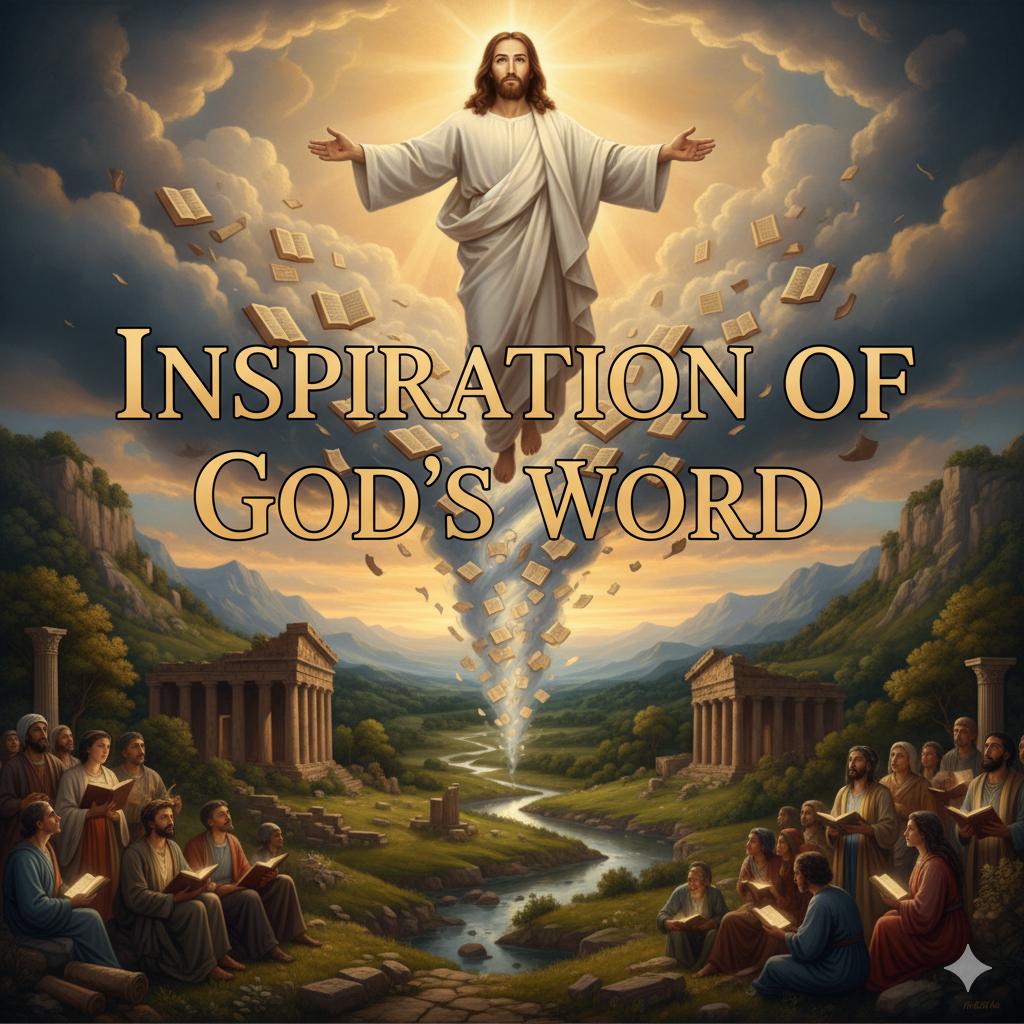
The Bible is a unique book written by the inspiration of the Holy Spirit in the sense that it was written when God personally guided the writers when they wrote the book. The word ‘inspiration’ occurs in the New Testament only once (2 Tim. 3:16). The Greek word used in this passage for inspiration is the opneustos which means “God-breathed. So inspiration refers to the activity of God’s Spirit upon the writers of the Bible, moving them to write what God wanted them to write. Hence the Bible proceeds from God.
God ‘breathed out His truth into the writers and they wrote what He wanted them to write. David affirmed this by saying that the Lord spoke through him and His word was in his tongue (2 Sam. 23:2). So the Scriptures are the creation of God through men when they were completely under the control of the Holy Spirit (2 Pet. 1:19-21). God selected human writers and guided them to write sixty-six books of the Bible with amazing unity over a period of 1600 years.
All the writers of the Bible did not know at the time of writing that they were writing the Scriptures. This shows that the Holy Spirit guided all of them to write the Scriptures without contradictions and errors. So the Bible is not the work of men but the work of holy men who wrote the Scriptures when they were moved by the Holy Spirit.
Inspiration of the Word of God is the self-revelation of God in written form by the activity of the Holy Spirit. Hence Bible carries God’s authority and it is the divine truth given to human beings without any error.
1. Theories of Inspiration
Many people find it very difficult to understand the truth of the supernatural inspiration of the Scriptures. They ask, ‘How can God move men to write the Scriptures? As a result of this reasoning, many theories of inspiration have been proposed by them to describe how the Word of God was written.
a. Plenary verbal inspiration
This is the orthodox view of the inspiration of the Word of God by the Church. This theory says that the Spirit of God guided the authors in the choice of the words in the original manuscripts of the Bible. The word ‘plenary’ means full in
every part. So the biblical writers were inspired not merely in their idens but the very words they used. The word verbal meant by means of worths. So the whole Bible (plenary) and the very words (verbal) of the Scriptures are mapired by God. This means that all the words in the Bible were writteris directed try God and the Bible is the Word of God including each and every ward This view is different from the dictation view of inspiration. The dictation view
states that God used human beings as typewriters to write the Scriphires. But plenary verbal inspiration view states that both the writers and God were involved in the production of the Scriptures. It is God’s word due to its divine touch and it is written by men like us to enable us to understand the Bible easily. God used the authors of the Bible to write the Scriptures with their personality and understanding. They gathered their materials from various sources like historical, religious or secular records. But God moved them to write the Scriptures. They wrote as directed by God without knowing that they were writing parts of the Bible. So the Bible is the product of both God and man. The Bible was God’s message written in the language of man and not corrupted by the sin of man. It gives the solution to the problem of sin in man. The Bible is divine and human in every part. It is not partly divine or partly human, but fully divine and also fully human,
Infallible and inerrant: The orthodox view also says that the Scripture is infallible and inerrant. The Bible is considered infallible as it cannot be wrong on any subject and is fully accurate. Another word used along with infallibility is inerrant. It means that the Bible does not contain any error as a statement of fact. This view believes that the Bible is verbally inspired, infallible and inerrant due to God’s effort to move men to write the Scriptures. The Bible can be believed one hundred per cent for the statement of faith of the Church.
The scholars who accept this view accept that the inspiration and infallibility applies to the original writings in Hebrew and Greek languages. It does not apply to copies or translations. No original manuscripts are available now. Now we have the copies of the original manuscripts. We believe that the available manuscripts were very carefully copied by men of God and so they are similar to the original manuscripts. Hundreds of such reliable copies are available now. So these scholars accept the present Hebrew and the Greek manuscripts of the Bible as accurate reproduction of the original, and they are the very Word of God.
b. The Dictation theory
This theory is also called as the Mechanical theory of inspiration. This theory holds the view that God dictated the Scriptures to the writers. The authors were like typewriters. They were also like the stenographers and the Word of God came through them. This theory cannot be accepted due to the following reasons. i. The difference in the style and vocabulary in the books of the Bible: This theory disallows human authorship and personality in writing. If the human authors are just like stenographers or typewriters then the style of writing and vocabulary of the Bible will be the same in all the books of the Bible. But we find
hurman personality, liberary style and the personal interest of all the authors in their book. The way in which each book is written with differeed style and personal interest does not support the above view.
ii. It is against the teaching of the Bible: The Bible accepts human authorship. This is supported by biblical references, ‘men spok (2 Pvt. 1:21. Mark 7:56) while referring to the inspiration of the Scriptures. So we can say that God moved the human authors to write the Scriptures but did not use the process of dictation
iii. The personal desires and the fears of the authors: The Bible authors have expressed their personal fears and the desires while they wrote the Bible. For example, Paul’s deep desire in Romans 9:1-3 will become irrelevant if this theory is accepted.
iv. The preparation of the authors to write the books of the Bible: Luke wrote that he wrote the Book of Luke after researching and referring to many sources (Luke 1:1-3). He also wrote, ‘It seemed good to me. This reference shows the involvement of human beings in the production of Scriptures, which disproves the dictation theory.
c. The Concept theory
