
In the last weeks of August 2019, Nwanyieze, an immigrant from Nigeria, fell ill and couldn’t open her corner restaurant in a mall in the central district of Johannesburg. Normally she would have been selling Nigerian delicacies—such as traditional egusi and ogbono soups—but her poor health kept her at home when a wave of anti-immigrant attacks hit the area that year in early September.
Management later told her gunshots had rung out as anti-immigrant protestors demonstrated outside the mall, forcing it to close temporarily to avoid looting and vandalism. Nwanyieze, who is using only her nickname due to fear of repercussion for her uncertain legal status, eventually shut down her restaurant when the area no longer felt safe. A South African friend gave her enough money to start over in a new location. But then the COVID-19 lockdown in 2020 closed everything down and left Nwanyieze without savings to fall back on.
“I barely survived and had to move in with a friend,” Nwanyieze said. As a Christian, she leaned on her relationship with God for comfort.
Nwanyieze lives in South Africa without documentation, though she declined to say how she entered the country. A single mother, Nwanyieze said she lives and works in Johannesburg because she couldn’t get stable work in Nigeria. Her retired parents and four children depend on the money she sends back. Though the 2019 attacks cost her both her business and her sense of peace, Nwanyieze said she couldn’t afford to return to Nigeria. “I was stranded,” she told CT.
When anti-immigrant protests flared up again this spring, causing some African immigrants to close their shops for safety, Nwanyieze’s fear and uncertainty returned.
Anti-immigration sentiment in South Africa has increased recently due to high unemployment rates—above 30 percent—and deteriorating public services, as citizens fear losing their jobs to migrants.
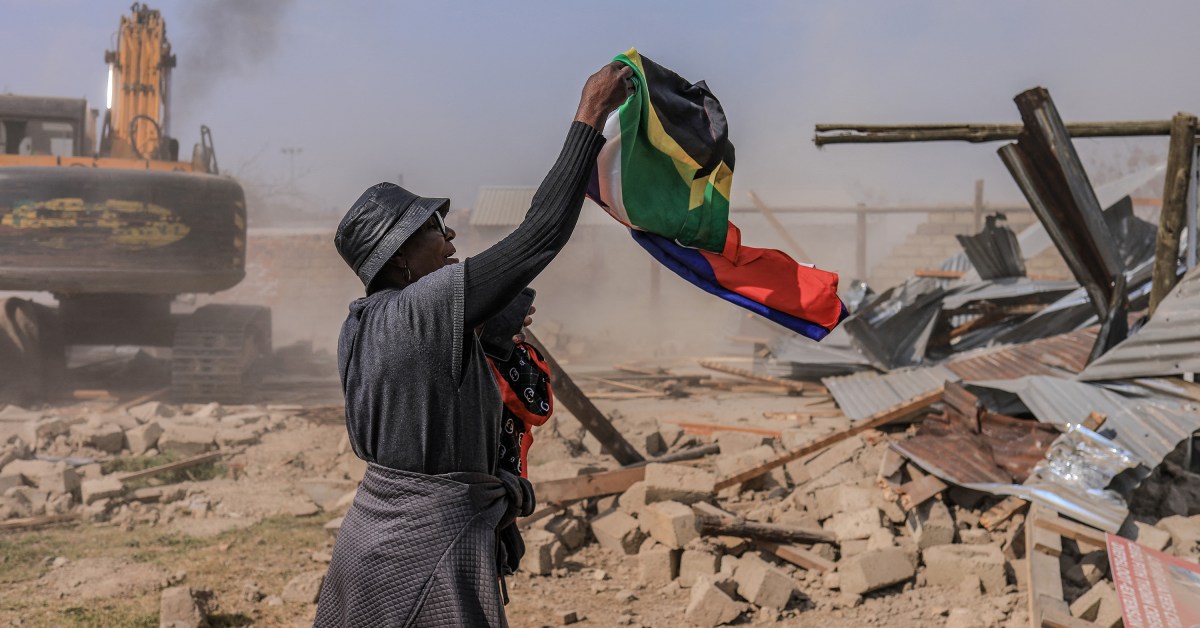
In April and May, anti-illegal immigration organizations such as March and March held street demonstrations to push for the expulsion of other Black Africans from the country. Some protests have escalated to violence. Anti-immigration violence has resulted in at least three people killed and dozens of shacks torched, some with people still inside.
Groups of anti-immigration South Africans—some of them armed—went door-to-door telling foreigners to leave the country by June 30, according to The Telegraph. Fearing violence, thousands of immigrants fled South Africa ahead of the deadline. More than 1,000 Nigerians have signed up for repatriation by their government, according to AllAfrica.
Nwanyieze heard about the June 30 ultimatum from a customer of her reopened restaurant, who cautioned her to lay low.
“After the customer warned me, I did not open my shop for a few days,” she said. Nwanyieze said one Nigerian friend returned home after her husband died, fearing for her and her daughter’s safety despite having proper immigration paperwork.
As of July 13, the South African government has increased deportations, removing 53,000 undocumented immigrants in a month’s time. More than 80 percent were from Malawi.
The hostility toward immigrants isn’t new. Anti-immigrant vigilante groups have targeted Nigerians and other African immigrants for years, arguing they were cracking down on illegal immigrants and drug traffickers. Recent opposition has especially affected people from Malawi, Zimbabwe, Ghana, and Nigeria.
Nwanyieze, who has now lived in South Africa for a decade, said she tried for the past seven years to get proper immigration papers without success. While she paid the necessary fees, Nwanyieze said she has seen no forward progress. She disagrees with people who argue she is taking jobs from locals: “I sell mostly local food and started my business from scratch.”
Much opposition to immigration comes from Zulu cultural activists and low-income working-class communities, who worry about losing low-skill jobs such as house cleaning to an influx of immigrants willing to work for less. South Africa still has one of the world’s largest gaps between rich and poor, showing little improvement since the end of apartheid in 1994.
Some observers believe politicians shift blame to make immigrants scapegoats for South Africa’s social ills. A few church leaders have warned that the wave of anti-immigration resentment flows from failures in governance.
Disagreement about how to address illegal immigration has also reached churches. One pastor, ST Dlamini, who spoke at a March and March protest in April, called for immigrants without legal status to return home and fight for their own countries’ financial success instead of straining South Africa’s infrastructure. Dlamini sparked controversy when he referenced John 10:1 in an interview with SABC News, saying, “Anyone who enters the country without proper documentation is a thief.”
Meanwhile, other church leaders are seeking ways to help immigrants. Siegfried Ngubane, the presiding bishop of the Reformed Evangelical Anglican Church of South Africa in Cape Town, said his church is “encouraging our members to love and care and speak out without encouraging illegal immigration.”
His denomination raised a special fund to provide safe homes, food, and clothing for affected migrants.
Samson Matabaro, founder and director of the Key Ministry International in Pietermaritzburg, KwaZulu-Natal, immigrated to South Africa from Burundi as a refugee in 2002. Matabaro said when he first arrived in South Africa, he met many refugees and asylum seekers suffering from poverty, isolation, trauma, and spiritual hopelessness.
After a wave of anti-immigrant attacks in 2008, he saw families sleeping in churches and community halls, afraid to go back to their houses. Children couldn’t afford school. Families wrestled with trauma from surviving wars and displacement.
He said that’s when he “saw what God was calling me to respond to in a practical way.”
Now a permanent resident, Matabaro tries to reach struggling immigrants with both humanitarian and spiritual help. He partners with local Christians and churches to provide food and other necessities to migrant families. In areas where tension is highest, they also hand out blankets to those sheltering in public buildings for fear of attacks. Matabaro weekly goes on pastoral visits to remind immigrants that “God remains their refuge even in times of fear.”
Still, language and cultural differences, ongoing discrimination, and difficulty in accessing government services—such as documentation help for refugees and asylum seekers—complicates his work.
Mxolisi Nyuswa, the programs director at KwaZulu-Natal Christian Council in South Africa, said other churches are providing similar assistance to migrants who camp outside police stations and government offices looking for protection. Some churches hold dialogue meetings between foreign nationals and local residents, hoping to reduce grievances.
“The church is not quiet,” Nyuswa told Christian Daily International. He said that when social movements started protests, churches began looking for ways to support immigrants.
Nwanyieze said her local church wasn’t as supportive. The congregation shared many views of anti-immigration activists, and her pastor’s sermons carried the same message. Most didn’t know she had immigrated without documentation, but Nwanyieze still didn’t feel safe, so she stopped attending.
When circumstances feel dire, Nwanyieze remembers Psalm 9:10 and said she is “comforted by God’s word that he will never forsake those who seek him.”
Still, she feels tired of living in uncertainty. Nwanyieze said she would return to Nigeria if she could find stable work there. The hostility in South Africa makes it difficult to feel safe, but unemployment in Nigeria scares her too.
Protest-related closures have led her to dip into her savings to keep her restaurant running, making it more difficult to afford a flight home. She hopes that by staying in South Africa a while longer, she can grow her restaurant—and her earnings—and finish a bachelor’s degree in health science, for which she received a scholarship. Maybe then she can return to Nigeria.
“In the end home is home, and I will go back,” she said.
