
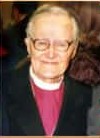
Birth: 08-12-1909
Death:30-01-1998
Native Place : New Castle
Country: England
Place of Vision : India
James Edward Lesslie Newbigin was a British theologian, missionary, church leader, and bishop. In 1929, James accepted Christ as his savior while he was studying at Queen’s College, Cambridge. He was attracted to the preaching of William Temple and John Raleigh Mott and joined Student Christian Movement (SCM). In one of the SCM gatherings in Stanwick, he experienced the call to ministry.
In 1933, He joined Westminster College, Cambridge for training in the ministry. In July 1936, he was ordained to work as a Church of Scotland missionary at the Madras Mission. A month later he married Helen Henderson, and together they set off for mission work in India. He quickly learned Tamil and began his ministry as a village evangelist. However, he was deeply troubled by competing denominational missions that often resulted in the Christians being segregated based on their caste. He saw this as a contradiction to the gospel of reconciliation, and a primary obstacle to missionary work. He worked hard to bring unity among the various denominational churches. His efforts led to the formation of the Church of South India uniting the Anglican, Congregational, Methodist, and Presbyterian denominations. In 1947, he was appointed as Bishop of the Diocese of Madurai. In 1959, James became General-Secretary of the International Missionary Council in Geneva and was responsible for its integration with the World Council of Churches.
James was a brilliant writer and one of the most influential theologians of his era who strongly advocated Christian unity. He believed that the church was the chosen people of God, chosen not merely for God’s blessing but for service as God’s missionary people. He sought after unity in the church and advocated for universal progress in the ministry through shared missionary endeavors. Quality rather than quantity was of more concern for James. By the nature of his heart, pastoral work, missionary vision, and the comprehensiveness of his ministry, he was truly a powerful man of God.
