
Every time Bryan Sands got into his Dodge Grand Caravan, he prayed to God with a few requests: “Keep me accident-free, ticket-free, and grant me good conversations.” So he certainly wasn’t planning to cut off a cop in Hawaii.
According to Sands, the patrolman walked to the window and announced his body cam was rolling. Sands had been speeding and made an illegal lane change, the officer told him. “You can pick the one you want,” the policeman added—an $80 fine, or a $150 one. Sands took the better offer.
He’d seen worse. There was the dark, rainy night he went too wide on a right turn, crossed the center divider in a hurry, and ended up busting his transmission. Fortunately, his best friend, a mechanic, liked to donate repairs so Sands could stay in his figurative lane. Which was an unusual one: pastoring from behind the wheel of an Uber.
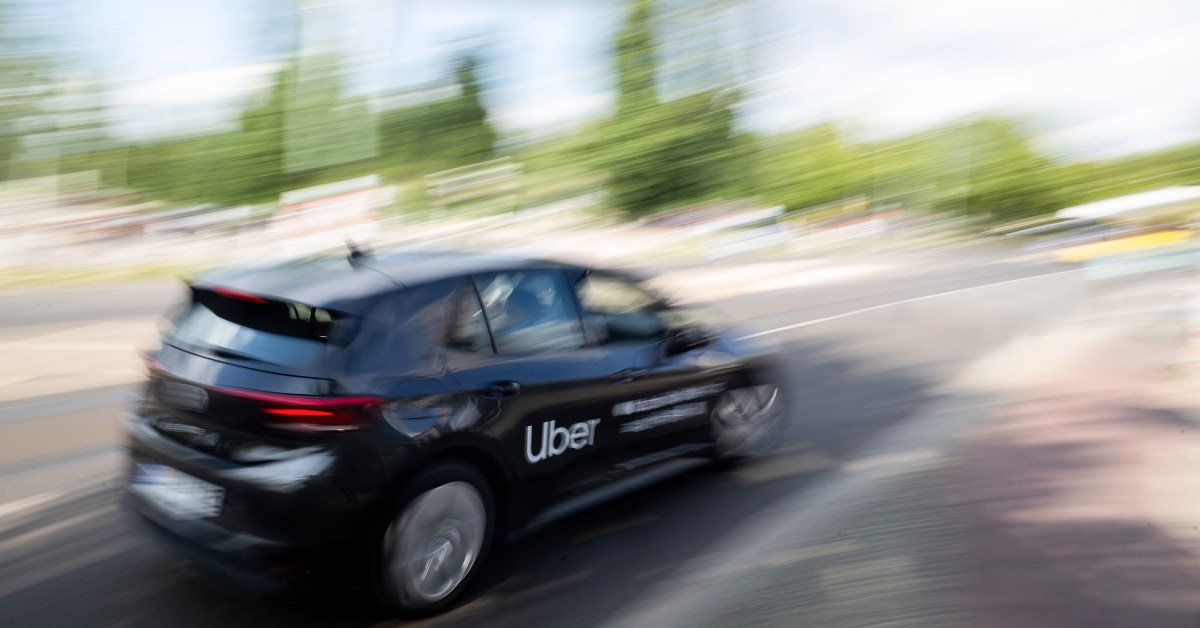
Sands’ chauffeur ministry began in 2017, when he wanted some extra cash while his wife, Caz, took a breather from full-time ministry to be home with their daughters. At the time, Sands was a campus pastor for Hope International University in Fullerton, California. Every Friday night for a year, he left work and put the Uber decal on his windshield, roaming Orange County for eight-hour shifts.
Once, a young woman summoned him to Laguna Beach so she could go clubbing. Minutes later, after learning he was a pastor, she told Sands it was her first time going out since her husband shot himself in front of her. “You could just feel the weight in the car,” he recalled.
For the next half hour, Sands’ eyes were on the road, but he listened to the woman share about her late husband’s downward spiral and the therapy she needed to cope. They got stuck in traffic, but the woman wasn’t in a hurry, finally exiting with a thank you and a handshake. Sands, after recording himself telling the story so he wouldn’t forget it, prayed again: “Thank you, Jesus, for using me to be a part of her process.”
 Image courtesy of Bryan Sands
Christians have paired driving with ministry for years. Decades after Jerry Falwell expanded his Baptist church by deploying buses for neighborhood pickups, about 60 Christians in Uruguay formed an alliance of taxi drivers to operate “moving pulpits” in the late 1990s. And Brooklyn streets featured several cab ministers in the 2010s—some who took confessions, and others who played Mozart and kept seats “immaculately clean” to evoke the presence of God.
Davidson Hang entered plenty of his own heartfelt conversations while driving for Uber in North Brunswick, New Jersey, in 2024. He wasn’t supposed to be working a rideshare gig. He had been thriving, at least on paper.
Hang’s parents, refugees from Vietnam, had sparked in him an “immigrant mentality” that mixed with big-city workaholism to earn him top sales jobs at LinkedIn and Fortune magazine. “If salvation’s by my works,” Hang told CT in an interview, “then I was killing it.”
Instead, his work was killing him. He had plenty of material blessings, but the acclaim, the titles, and the money couldn’t heal the wound of his father leaving without a word during his sophomore year of high school. It couldn’t erase $100,000 of debt. Or save his shaky marriage. Hang turned to drugs and drove under the influence. He had friends die by suicide.
So he took a leap of faith and got into an Uber, challenging himself to meet and learn from 1,000 random strangers as a full-time driver, politely asking passengers to describe the happiest and saddest moments of their lives.
“When else are you getting someone’s attention for 30 or 40 minutes?” Hang said. Over the course of about eight months, those minutes added up. After Hang connected with a mentor who was Christian, he started weaving in questions about faith.
Back to back to back, he said, testimonies poured through his vehicle—many of which he livestreamed on YouTube with the passengers’ permission. One man revealed he’d killed someone while driving drunk but found the Bible in jail and had “no shred of doubt that he was going to heaven.” Visitors from India praised God while lamenting that their churches had been razed. A young woman in her 20s confessed that she’d smoked so much weed that she neglected caring for her sister—until Jesus called her to sobriety.
“I’d never picked up the Bible before that,” Hang said. “God was talking to me through all these people.” His Uber profits were barely enough to make ends meet, but the rides became some of the most formative moments of his life. Removed from the corporate bubble, he was taken aback by how fulfilled these normal, if imperfect, people seemed compared to colleagues who were making $400,000 and “taking presidents’ club all-expenses paid trips to Hawaii.”
Bryan Sands may have driven some of those executives during their island retreats. His family moved to Honolulu after his initial Uber stint in California, and he returned to the road during a break from pastoring Kaimuki Christian Church. His four daughters helped clean up the van, which they would stock with complimentary mints and water bottles, and he struck up hundreds of faith conversations across Waikiki.
The passengers were diverse. There were young adults indulging in CBD gummies on their way to party in Chinatown. There were solo riders who’d been drinking for hours and requested pit stops at McDonald’s—“Let me get you something!” they would tell Sands. There was a same-sex couple—two women in their 70s—who shared their unpleasant history in the Catholic Church and that one of them grew up thinking she was a boy.
“Everyone knows it’s just a side gig,” Sands said of driving for Uber. “So people always ask, ‘What do you really do?’”
Revealing himself as a man of God prompted a few debates—typically from people who were still curious about faith. Only once was Sands really put on edge.
“This guy had a few drinks and berated me for 35 minutes,” he said. The man blamed God for his son’s drug addiction and imprisonment. “Then he gave me a massive tip. He just needed an ear.”
Across his 3,459 Uber drives, Sands estimates that half of his passengers were interested in faith conversations. He didn’t push it. But if people asked questions, he dove in. One of the 20-something girls headed for Chinatown wanted Sands’ recommendation for an impactful Bible verse. “They were pregaming it,” he said, “but everyone’s hungry and thirsty for truth.”
Meanwhile, one of the older, married women—the one who’d questioned her sex as a child—told him she could listen to him preach on Sundays. “The fact she trusted me was huge,” he said.
Sands has since moved on from Uber driving—higher taxes and gas prices cut too deeply into his profits after his family returned to California in 2025. Uber was also set to roll out autonomous vehicles, increasing competition for human jobs.
Sands is very much in the pro-human camp there. “I think pastors everywhere should be doing some type of rideshare [work],” he said. “We get so insulated in our sphere.” One of Sands’ buddies, a retired firefighter, followed his advice. He sold his truck, got an Uber-approved car, and planned to donate his earnings toward mission work in Africa. Even nonbelievers get it: Journalist Alex Kantrowitz once called Uber the “perfect vehicle for missionary work,” enabling “on-demand proselytization.”
It certainly helped convert Hang, who grew up atheist but got baptized along with his wife this year. Christian neighbors invited them to church in 2025, but the first seeds were planted inside his car. Hang is now a life coach, mentoring 315 clients in the industry that once ruined him, including executives at Amazon and Google. “A lot of them are seeking Christ without really knowing it,” Hang said.
Sands, meanwhile, is applying his Uber lessons to Restore Christian Church, which went on to plant in Chino, California. Too often, he said, his Uber passengers entered conversations about Jesus knowing what Christ was against rather than what he was for. What if they could just enter church like they did his van—or Hang’s car—knowing right away it was a place without judgment?
Sands’ Uber ministry wasn’t perfect, even if his 4.98-star rating came close. Sometimes he’d talk sports for an entire drive then wonder if he’d missed the chance to share something richer. His pastoral heart became frustrated at the “one-shot” nature of the encounters, always wishing he could do more to follow up. The fact he even had an entry point, however, was a routine blessing.
“If I go sit down next to somebody at a park bench, it’s kind of weird,” he said. “It’s socially acceptable to engage when you get an Uber. The barrier isn’t there.”
It certainly wasn’t during one of Sands’ last rides, before he quit to juggle other gigs like substitute teaching. He remembers the drive vividly: He’d picked up an agnostic man in his 60s who needed a ride to an AA meeting. Inside what Sands likes to call his “sanctuary on wheels,” the two had such an effortless conversation that they decided to reunite for lunch a few days later.
When Sands finally hung up his keys to plant his church, that same man was the first person to donate money to the effort, “just because he saw the heart.”

