
Conditions have not improved for Christians in Iran since pastor Ara Torosian came to the United States as a refugee in 2010.
Torosian is grateful for the religious freedom he has found in the United States, where he now pastors a Farsi-speaking congregation in Los Angeles. But he is disheartened by another stark reality: America has closed the door on the persecuted church.
Unless something dramatically changes over the next month, the United States is on track to let in zero persecuted Christian refugees over the 2026 fiscal year, according to a new report by the Christian humanitarian organizations World Relief and Open Doors US.
“America gave us the freedom to stop being afraid,” said Torosian, an American flag pin glinting on his suit jacket. “I don’t want to lose that.”
Over the past year, at least 4,849 Christians were killed for their faith, and thousands more faced arrests, imprisonment, and other forms of persecution, according to Open Doors’ 2026 World Watch List. Religiously motivated persecution has forced more than 224,129 Christians to flee their homes.
Despite that, the US refugee program has offered no relief. Resettlement in the United States for Christians fleeing religious persecution from countries on Open Doors’ top 50 most oppressive list has dropped by 100 percent since 2015.
The Trump administration is leading a retreat from the United States’ historic role as a country of refuge for persecuted religious minorities. The number of refugees admitted during the federal government’s fiscal year, which ends September 30, is likely to be around 11,000–16,000. So far, virtually all have been white South Africans, who come from a country where the majority identifies as Christian and there is no track record of religious persecution against Christians. The administration has said these refugees are “unjust racial discrimination.”
The only other refugees admitted this year have been three Afghans, who were not religious minorities.
“We have more Christians facing persecution than ever recorded, and it’s at a time when the US is taking less action, since the start of the refugee program, to welcome persecuted Christians,” Myal Greene, president and CEO of World Relief, told CT. “I think that sends a very startling message to Christians around the world, and also to advocates for persecuted Christians in this country that, in many ways, they’re not a priority of this government.”
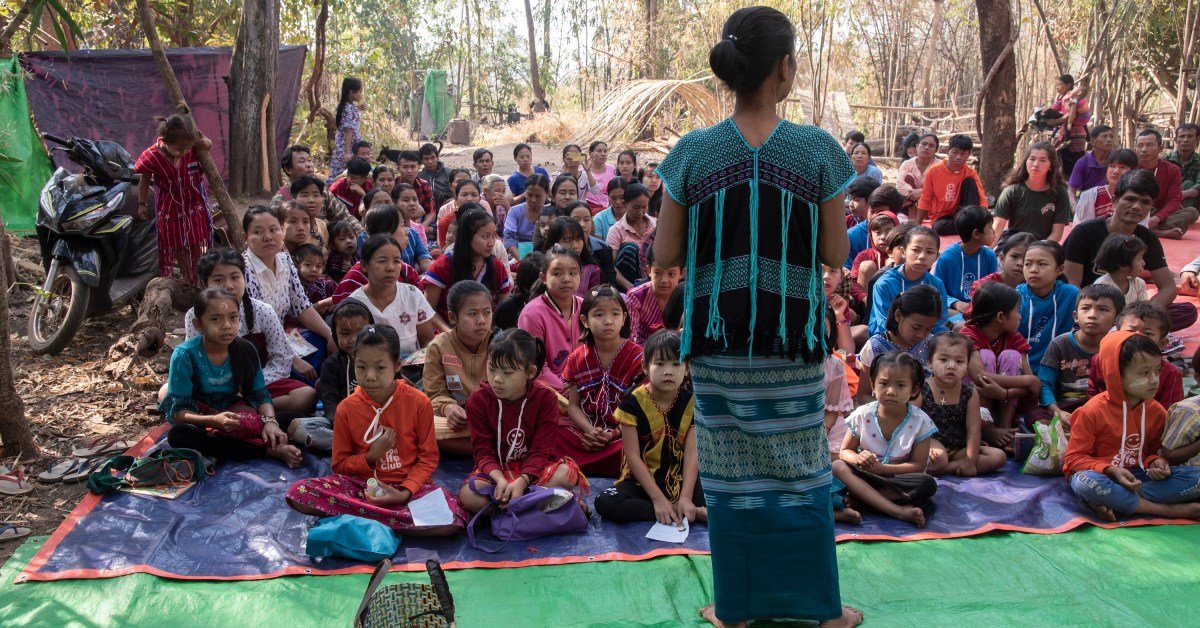
The report also contains stories of Christian refugees who were allowed into the US in previous years who fled on account of persecution. One focused on an Afghan man and his family who converted from Islam to Christianity and survived an attack after speaking up about his faith. Another story focused on Saw Shining, a Christian Karen minority refugee from Burma (Myanmar) who has since become a pastor in Minneapolis.
Admissions of other persecuted religious minorities have also flatlined.
“The US has in many ways closed the door on those fleeing persecution on account of their faith,” Matthew Soerens, vice president of advocacy and policy for World Relief, said at a Thursday briefing about the report.
“A lot of Christians around the world have looked to the United States as a safe place for Christians,” he said. “This year that’s just not a reputation that we’re living into.”
Beyond halting most refugee admissions, the report also notes that the Department of Homeland Security has reevaluated refugees already in the country. In November 2025, the agency launched Operation PARRIS (Post-Admission Refugee Reverification and Integrity Strengthening), during which it detained 150 resettled refugees. The effort was paused pending legal challenges, but DHS has continued asking refugees to come in for re-interviews.
Over 30 members of Shining’s congregation were detained during Operation PARRIS, as well as another Christian Karen who was separated from her five-month-old, breastfeeding baby. The mother was sent to Texas and detained for three weeks.
Since the start of the second Trump administration, 20 members of Torosian’s church have been detained by Immigration and Customs Enforcement (ICE), including six children under the age of 12. All of them were Christians who had fled Iran because of their faith, Torosian said.
The husband of one couple in his church was detained for 14 months by ICE in Texas, despite having work permits. Only after Torosian raised money to hire a lawyer were they able to secure his release.
“These people are running from danger. They’re not bringing danger to America,” Torosian said. He wants the administration to prioritize “justice, fairness, and mercy” in the refugee program.
The US refugee resettlement program dates to the 1950s. Under current law, it allows for people fleeing certain kinds of persecution in their home country to be interviewed and vetted abroad before arriving in the United States. The president sets an annual limit on how many refugees the country accepts.
Greene and Open Doors president and CEO Ryan Brown noted that the second Trump administration’s policies toward persecuted Christians are more restrictive than policies during President Donald Trump’s first time in office.
While both administrations slashed the refugee ceiling in comparison with Republican and Democratic administrations that preceded them, the president has also spoken favorably about Christian refugees.
But the numbers tell a different story, something that has come as unwelcome news to Christians who support Trump, Greene said.
“There’s a really high expectation that there is still a pathway for persecuted Christians to come to the US,” Greene said. “Many people are surprised and completely unaware [of the reality].”
In a 2025 survey of American evangelicals, Lifeway Research found that 70 percent of evangelical Christians believe the United States “has a moral responsibility” to welcome refugees. Lifeway’s 2026 survey of evangelical pastors found even more support for the view—82 percent.
In a statement to CT on Friday, the State Department said the US refugee program remains suspended with “certain exceptions” and that the U.S. is “prioritizing Afrikaaners” for resettlement.
Soerens hopes the Trump administration will reverse course when it announces its next refugee ceiling for fiscal year 2027 this fall: “We think the US should be doing more, not less, and certainly not nothing, to receive those who have no safe place to be, and offer them the chance to experience religious freedom.”
