
In this series
In this series


For many years, it was widely accepted that the way to help people addicted to drugs was to support them through detoxing: Get the substance out of their system to give them a shot at life without it. More recently, however, the doctrine of “harm reduction” has partially supplanted that approach, particularly in institutions that work with homeless people. But what if such “helping” actually hurts?
My first teacher on this subject was Marsh Ward. I met him on a bitter January night in 1995. He was clinical director of Clean and Sober Streets in Washington, DC, a half mile from the Capitol. A recovering alcoholic born in 1934, Ward had left his job as a psychotherapist in Minnesota to come to Washington in 1987. At that point, he aimed to build a program without rules: “They’re all adults, aren’t they?”
We spent the evening walking in our socks through his facility with offices and beds, our conversations punctuated by mutterings of addicts. They were suffering withdrawal symptoms and fighting fears. Ward said he initially thought that if he just “brought people in off the streets and gave them food, they’d pull themselves together and get on with their lives.” After a year, however, he realized that if “you treat them that way, you’re killing them. You’re enabling them to stay with their disease.”
Soon Ward set rules: “No violence, no sex. If you make no progress, you’re out. Any stealing, you’re out.” For a while, he tended to accept excuses for violations. “We did it sometimes just out of mercy, or sympathy because we like the guy—but it never worked out,” he told me. “Every time we let someone get by, he screwed up again. It’s hard to kick people out, but you have to think of the effect on the honest people.”
Ward confessed his helplessness in the face of severe mental illness, but he also explained that he’d changed his former view of the homeless as an undifferentiated mass of people who had no real ability to change their circumstances. Though he didn’t have faith in Christ, Ward believed in some kind of higher power and insisted on homeless people as individuals whose lives would improve with sobriety, spirituality, and supportive community.
Homeless people may feel like they’re hemmed in by obstacles as solid as a brick wall, Ward told me, but with those three helps one can come to see that the wall is actually cardboard: “He can punch right through.” The worst thing, Ward thought, was to indulge addicts and teach them to accept another punch from their addictions again and again.
Over the 25 years after that 1995 interview, many came to think a Ward-style, “no progress, you’re out” policy was lacking in compassion: Give people more time, more chances, they said. Maybe they were right, but 24.9 million Americans had some kind of “illicit drug use disorder” in 2020, compared to 5.6 million who were “dependent on or abused illicit drugs” in 2001.
Those numbers aren’t directly comparable—the questions were different—but even if the figure had doubled rather than quintupled, it seems clear that something went wrong.
In 2023, I saw firsthand how $10 in the Tenderloin neighborhood of San Francisco bought a dose of fentanyl said to be 50 times more potent than heroin. And on an average day in San Francisco in 2022 and 2023, fentanyl killed two people.
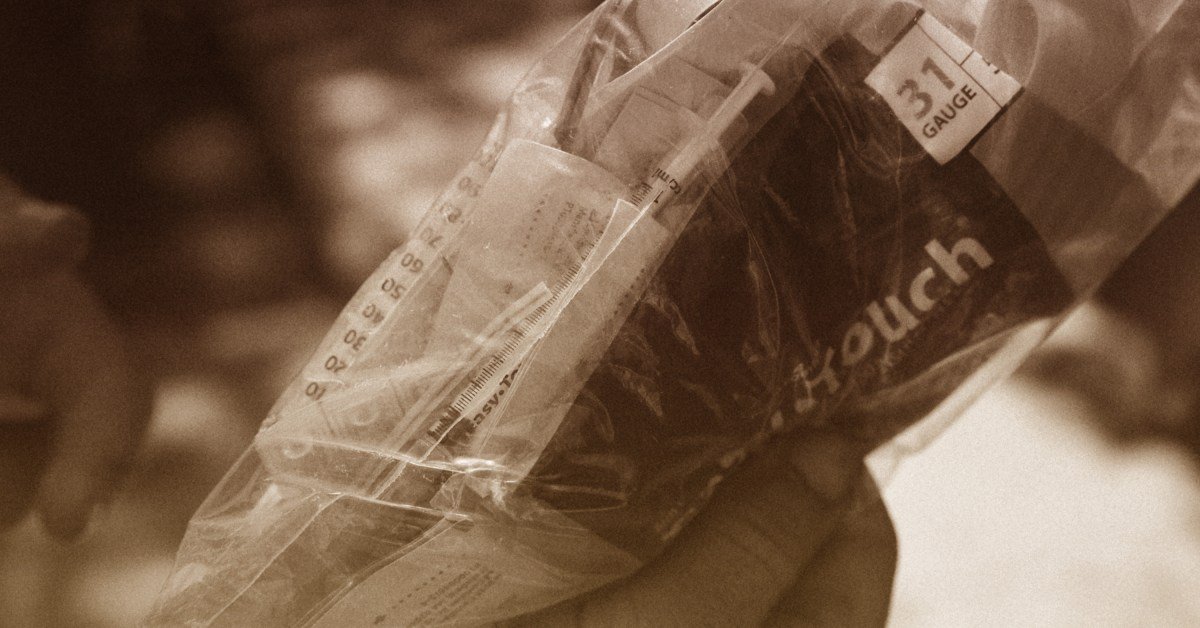
Tolerance was in when I visited the Tenderloin that year, but was it actually compassionate? Even with police sitting in cars nearby, I saw addicts on sidewalk after sidewalk placing fentanyl powder on squares of aluminum foil, putting a lighter underneath the foil, and inhaling the fumes. What came next was not only tolerance but encouragement. Two government-funded “harm reduction” workers passed among the users as I watched. They hauled a wagon filled with aluminum foil, glass pipes, needles, and other fentanyl-made-easy implements.
“Harm reduction,” they warbled. “Need anything?” All the soundtrack missed was jingly music like an ice cream truck, calling in customers who were in the “fentanyl fold,” half-crouching on two feet with arms at unusual angles. Many were missing teeth. Some were missing their pants. Some were stationary in the fold for at least 20 minutes.
This “harm reduction” project mainly handed out clean needles and naloxone, often known by the trade name of the most popular variant, Narcan. Administered as a person is overdosing, naloxone is a lifesaver. But if we look past emergency rescues, how many lives were lost as programs designed around detox and order were not merely forgotten but were actively discouraged in San Francisco and beyond?
And drugs users themselves are not the only victims of harmful “harm reduction.” Other people in the Tenderloin—many of them immigrants crammed into dilapidated apartment buildings while working to have better lives—suffer too. Those families contribute to making the Tenderloin the San Francisco neighborhood with the most children per acre: They walked to school in bunches, with eyes wide open in a neighborhood wholly unlike that of Mister Rogers.
On my reporting trip to San Francisco, an overwhelming majority of the fentanyl addicts I saw were homeless. They slept on the sidewalk or in tents, unimpeded. I met and interviewed some of them but did not come across Jessica DiDia or her mother, Laurie Steves, who around the same time was trying to save Jessica from dying on the street.
Journalist Heather Knight did meet her, though, and recorded a revealing dialogue between mother and daughter:
Laurie: “We need to get you in a program. Things could be good.”
Jessica: “No.”
Laurie: “You know you’re going to die out here?”
Jessica: “So? I’m going to die one day anyway.”
Laurie: “You could be warm at night. You could be dry. You could have a home and have a job and have a life.”
Jessica: “You can’t make me want it to happen.”
Jessica walked away, telling her mom to leave her alone.
I haven’t been able to find out what happened to Jessica. The year I visited, 2023, saw a high of 810 overdose deaths in San Francisco. That total dropped to about 630 in the next two years, and in 2025 city voters finally elected a mayor, Daniel Lurie, who said, “We’ve been too laissez-faire. There are kids walking down these streets every day seeing people openly use—and, frankly, die.”
Lurie as mayor gained approval for a Fentanyl State of Emergency Ordinance that ordered anyone city-paid not to distribute fentanyl paraphernalia: “We stopped freely handing out drug supplies and letting people kill themselves on our streets. It is not a basic right to use drugs openly in front of our kids.”
The city’s new drug policy is “the cessation of illicit drug use.” And city supervisor Matt Dorsey, a former drug user, has spoken of “reversing years of perverse incentives that have done more to exacerbate problems than solve them.”
