
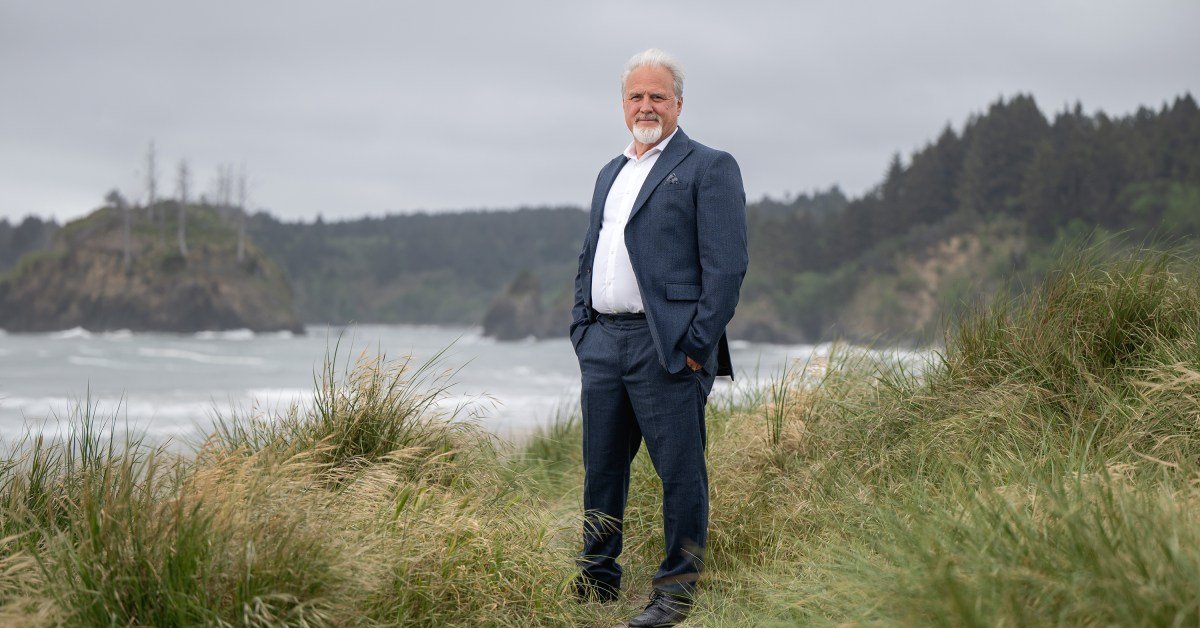
On the evening of October 14, 2016, armed Islamic terrorists from the Jama’at Nusrat al-Islam wal-Muslimin (JNIM) descended on American missionary Jeff Woodke’s home in Abalak, a town in northern Niger. They shot two house guards and abducted Woodke as he tried to escape, then moved him across the border into Mali.
For six years, five months, and five days, captors held Woodke under their control, often beating him, keeping him chained up for hours, and pressuring him to convert to Islam. Kidnappers released Woodke on March 20, 2023, after joint efforts by the United States and Nigerien governments.
For decades, foreign missionaries like Woodke have provided training and aid to local pastors and churches in Niger. However, increased political instability and jihadist activities have disrupted recent efforts in sub-Saharan Africa.
Following his successful July 2023 military coup, Niger general Abdourahamane Tiani ordered foreign troops, including the US military, to vacate the country. In October 2025, an unknown group kidnapped fellow American missionary Kevin Rideout—who was just released last month—from his home in the capital of Niamey. In neighboring Nigeria, kidnappings have become lucrative business—including mass kidnappings of Christian students and church members as well as pastors and theologians.
In his new memoir, All the Way Home: The Incredible True Story of an American Aid Worker’s Harrowing Seven Years as an Al-Qaida Hostage, Woodke recounts his days in captivity and navigating life post-captivity, including struggles with psychological and physical trauma. Woodke spoke to CT about his struggle with faith, loss of hope, and work advocating for others in captivity. This interview has been shortened and edited for clarity.
What made you decide to write about your experiences?
As a hostage, I didn’t have a lot to do sitting under my tree, so I wrote books in my head. That’s what I used to fill my time. I would write novels and books. This book wasn’t one of them, but I certainly knew I wanted to write when I came out. And it just seemed logical that this would be the first story that I told.
You said your book is about “the depths of the human soul, and what remains there when everything else has been stripped away.” What kept you alive for those years, and what was left in you in that sense?
Hope was the first thing to go, because you’re constantly told you’re going to go home. Then the Mujahideen [people engaged in jihad] pulls the rug out from underneath you and you’re stuck there. You end up not believing anything they say ever. After so many years, you figure it’s never going to end. Hope is pretty fickle, and it leaves fast.
Faith lasted a little longer, and I always held on to some part of it, but it was really love that carried me through. I knew that in order to survive, I would have to forgive. I started forgiving my captors when they hurt me, to their faces if I could. Forgiveness is based on God’s love, so that helped me to not become like my captors, begin to hate, or lose my humanity. That allowed me, when I got out, to have a platform I could start rebuilding my life on that wasn’t based on anger, rage, and hatred.
You’ve also written about the need to protect the sanctity of human life from those who would degrade it. Tell me how your captors made you feel less than human.
For two months I was kept in basically a box, four feet by four feet by four feet. I wasn’t allowed to stand up. I wasn’t allowed to walk. I could go to the bathroom. We were in the Sahara. It was very hot. That was very dehumanizing—the chains, the constant insults, taking a swing at you when they wanted, shooting over your head, doing what they could to scare you.
Tell me about your faith now. You still have questions. What are some of those questions in your relationship with God?
When I was a hostage, I lost my religion, but I found my faith. Or I kept my faith. I think that my faith is probably a lot deeper now. My trust in God is far deeper than it was. Faith is far stronger than it was. I think it’s based very much on who God really is and how we’re supposed to treat each other.
That once again comes down to love, where we have the commands to love our Lord God [with all our] heart, soul, mind, and strength, and to love our neighbors as ourselves. It’s all about love and relationships.
I think, oftentimes, when faith takes a cultural spin and picks up attributes from whatever culture Christianity might be in, we can move away from some of those fundamental values of who God is and who we’re supposed to be. We can end up hanging a lot of things on our religion that have nothing to do with God. I think all those things for me kind of fell away.
What’s the substance of your faith now, and how is it different from your days before captivity?
In the days before captivity, I was at the peak of my career as a director of a Christian humanitarian organization in Niger. I was up in Abalak, up on the very edge of the desert, and I’d been there for almost 30 years. My captivity obviously destroyed my career in one day. I didn’t even know if my family was alive. I heard about COVID-19, but I didn’t get any news. I didn’t have a radio or anything.
I had to rethink what the basis and basics of my faith are. I think I’ve come out on the other side feeling less judgmental. I’m supposed to love people—everyone—no matter who they are. When I came up against people who hated me and wanted me dead, I had to learn how to forgive those people and how to love those people and how to wish the best for them, even when they wish the worst for me. So that transformed my faith into what it is now.
Two weeks ago, I interviewed a man whose nephews and nieces were killed by Fulani herdsmen. How can such a person still hold on to faith?
You can still have faith in God through forgiveness. It doesn’t mean you have to like them, and it doesn’t mean that you don’t have anger. But forgiveness is a practice that you need to engage in for the rest of your life. Sometimes it’s love expressed through clenched teeth. It doesn’t mean we don’t want to seek some sort of temporal justice either. We do have to participate to see people brought to justice and kept from hurting others.
We’ve got the perfect example in Jesus. God became incarnate to show us that it could be done. We don’t have to resort to violence or hatred or anything else to find some sort of way forward through tragedy.
There’s nothing that’s going to ease the pain or help the grief of someone who’s lost family members to violence. They simply have to go through that process. Perhaps it would take the rest of their lives. But as you go through the process, the guiding principle needs to be that same love that God has for us—that same indiscriminate, nonviolent, graceful love. As we hold on, we receive help to get past our pain, our rage, our anger, and to make the choices we need to make on a daily basis and to heal.
How should Christians advocate for those in captivity?
You need to remember the people who are being held and remember the people who are victims of violence, and to hold them up and to speak out for their case.
The Voice of the Martyrs was very helpful to my family while I was away and helpful to me. I didn’t know it until I got out. But they’re a very strong advocacy group for victims. I think that’s very important for the victim’s government to be the target of sustained pressure and advocacy—first and foremost from Christian-based groups keeping the person—the face of the individual—in front of leaders so that they cannot look away.
Prayer also works, of course. God never answered my prayers directly, but he answered the prayers of other people. I found that after I got out.
What were those unanswered prayers?
There came a time after so many years that I did not feel I’d ever get out. Obviously, negotiations, if they were even happening, were not working. I didn’t think that there would be a rescue attempt that could ever be successful because of the way the Mujahideen moved me around. I figured it would end badly for me. I asked God just to take me home, because going to heaven is better than sitting as a hostage in chains.
I was praying to go home to God, and everyone else was praying I would come out. Their prayers got answered, but mine didn’t. Now I can say thankfully so. But even when I came out, I wasn’t ready to walk back out in the world and be alive. It was very, very hard to reemerge from that captivity.
When did you feel like you finally made it all the way home, not just physically but emotionally?
It took about a year after my release. There was a Romanian fellow, Julian Ghergut, that I had met very briefly in captivity. I had promised I would get him out if I got out first and began working toward that end as soon as I got into the hands of the French special forces. It worked—we got him out. I went to see him in Romania. Achieving that closure took agency, choice, and work. It allowed me to come back to the US and feel I had finally come all the way home.
What would you say to someone who reads about you, Kevin Rideout, or others in captivity but still wants to do missionary work in dangerous places?
The Great Commission doesn’t say we only need to go to the easy spots. But we also need to be wise and not think that God is so small that he can’t get the job done without us. When you think about those hard and difficult places, you’re not going to do anybody—not God, not your family, not your mission or your church, or the kingdom of God—a service by getting injured, killed, or taken hostage. If that’s a great possibility, then I would say you need to wait a little while till the situation changes, or find somewhere you can go nearby and influence.
What do you want people to take away from your story?
I want the reader to come away feeling encouraged, feeling that even in the darkest pit there is still light, there is still love, God is still there. I can’t ever say that I felt God’s love for me, but I felt God’s love moving through me toward other people, toward my family, toward my captors. I could pray for those people. That is what got me through, and that is available to all of us at any time of any day.
