
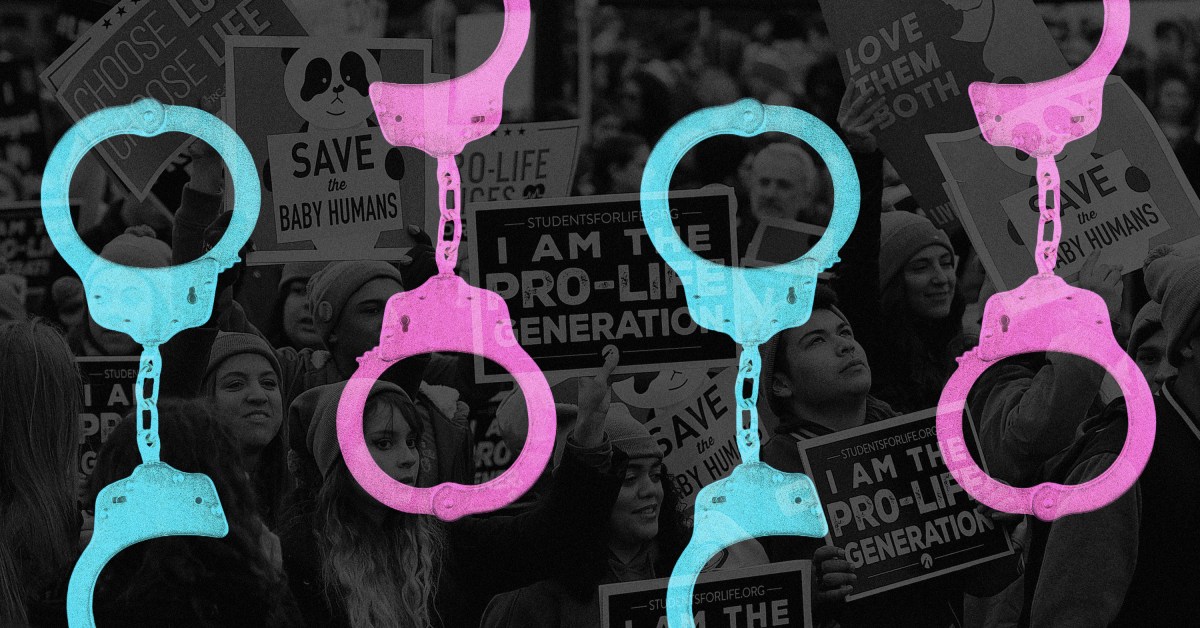
The Texas Republican Party’s decision last month to reaffirm its platform plank calling for “legislation to abolish abortion” divided the pro-life movement.
At issue was the platform’s call for “equal protection of the laws,” code for legislation to make women obtaining abortion, along with abortion providers, criminally liable for homicide.
“In practice, this language would subject vulnerable women to life in prison or even the death penalty,” Texas Alliance for Life said. “Texas Alliance for Life is in favor of putting abortion providers accountable, not punishing women for abortion,” the organization’s executive director, Amy O’Donnell, declared.
But the Foundation to Abolish Abortion applauded the platform. Pro-lifers who opposed criminal charges against women obtaining abortions were “denying equal protection, and they’re a big part of the problem, because they’re actually delaying abolition, because they give these politicians a win without actually doing what needs to be done,” Foundation to Abolish Abortion president Bradley Pierce said.
The abortion abolitionist movement, which claims the only way to abolish abortion is to treat it as murder and impose criminal penalties on anyone terminating a pregnancy, was almost entirely unknown until the beginning of the 2020s. It’s grown as pro-lifers have become frustrated with rising abortion rates.
The abortion abolitionist movement introduced legislation in 12 states in 2026 to classify abortion as homicide, with criminal penalties for women obtaining abortions. All 12 attempts failed, but the introduction of these bills attracted national attention even from secular media outlets.
Some pro-lifers who are not abolitionists believe the abortion abolitionist movement is damaging the pro-life movement’s public image. Pro-lifers have always believed abortion is killing. For decades, many have used the term murder to describe the procedure. But that doesn’t necessarily mean they want women who obtain abortions to be punished as murderers.
For decades, mainstream pro-life leaders insisted women who obtained abortions should be treated as victims, not perpetrators, of a crime. Even if churches encouraged women who had abortions to take personal responsibility for their sin and confess it before God, pro-life activists did not believe the law should hold women criminally liable for their action.
Supporters of abortion rights often argued that legal restrictions on abortion would result in criminal prosecutions against women who had abortions, but pro-life leaders insisted this was merely a canard invented by the abortion rights movement and would never happen.
“I don’t know of a single pro-life leader who would punish the mother,” National Right to Life Committee president John C. “Jack” Willke said in 1988. “I’ve never talked to an elected official who would.”
Pro-lifers thought they were on solid ground in saying this, because state laws that were in effect before Roe v. Wade did not criminalize women who had abortions. Instead, they imposed a criminal penalty only on the person who performed an abortion. Even women who performed abortions on themselves were almost never prosecuted, Americans United for Life senior counsel Clarke Forsythe found.
Forsythe’s detailed examination of the history of abortion law and jurisprudence—including an examination of historical studies produced by supporters of abortion rights—turned up only two cases (one in Pennsylvania in 1911 and another in Texas in 1922) in which a woman was prosecuted for her own abortion. “There is no documented case since 1922 in which a woman has been charged in an abortion in the United States,” Forsythe wrote in 2010.
Numerous state courts in the years before Roe explicitly exempted women from prosecution for their own abortions, Forsythe found. “A woman upon whom an abortion has been performed is regarded by the law as a victim of the crime, rather than as a participant in it,” a Maryland court declared in 1956. Other state courts said the same, even in the case of self-induced abortion.
For several decades after Roe v. Wade, the pro-life movement generally accepted this long legal precedent. A federal constitutional amendment protecting human life from the moment of conception would not result in criminal prosecution against women for their own abortions, pro-lifers thought, because the law would continue to treat women as victims along with their unborn children.
But by the beginning of the 2020s, some opponents of abortion found the reasoning behind these protections for women antiquated. Now that the majority of abortions are self-induced through abortion pills, can we really consider women victims rather than perpetrators of their crimes? And since courts have blocked other attempts to keep abortion pills out of pro-life states, is a law that threatens women with homicide charges the only way to bring abortion rates down, as some abortion abolitionists argue?
Those who believe in the pro-life movement’s traditional message of compassion for women who have abortions may struggle to respond to these critiques. After all, the pro-life movement’s current strategy has not succeeded in reducing abortion rates. But traditional pro-lifers’ insistence that this is a matter of principle rather than pragmatism may carry some weight.
So far, bills to make women criminally liable for abortion have not gotten out of committee even in strongly pro-life Republican state legislatures.
If the abortion abolitionist movement continues to gain ground, that may eventually change. But if the traditional pro-life movement has its way, the movement’s long-standing message that women should not be prosecuted for their abortions may win out in the end. For the foreseeable future, though, this division in the movement is likely to continue.
