
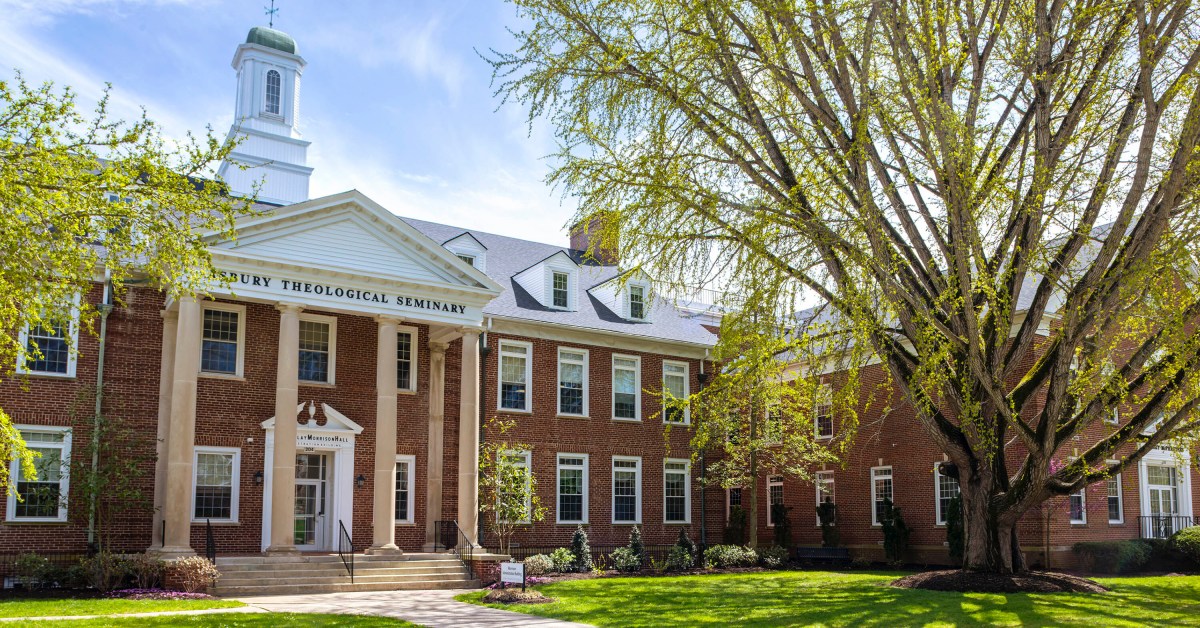
The United Methodist Church (UMC) has removed Asbury Theological Seminary from its list of schools approved for ordination candidates, a decision the school attributes to differences over the denomination’s position on traditional marriage.
In a statement released Thursday, Asbury said the denomination’s University Senate, which oversees affiliated educational institutions, removed the school from its approved list after a review.
“Throughout the process, we were honest and clear about our doctrinal and ethical standards, even when those differed from the recently amended Social Principles of the UMC. Their final decision to delist us was unilateral. While we had hoped for a different outcome, our focus remains steadfast on our unchanging calling,” Asbury president David Watson wrote.
United Methodists adopted their most recent social principles guidelines in 2024, removing a phrase stating that homosexuality is “incompatible with Christian teaching” that had been added in 1972.
The 103-year-old Asbury, based in Wilmore, Kentucky, is the nation’s largest and most prominent seminary affiliated with the Wesleyan movement. Without senate approval, Asbury graduates cannot seek ordination in the UMC. The Methodist Church initially approved Asbury in 1946, and again as the UMC approved it in 1981.
Current students and those enrolling in fall 2026 will be grandfathered in, according to Asbury’s release. Around 9 percent of Asbury students identify as United Methodist.
A statement from David Graves, a bishop in the UMC in Kentucky, announced the cut to the denomination in a written statement, thanking the school for the years of partnership.
“While this decision changes the nature of the relationship between The United Methodist Church and Asbury Seminary, it does not erase our shared history. We remain deeply grateful for the generations of leaders who were formed there and for the ministry they have offered to the Church and the world,” said Graves.
A UMC spokesperson said in a statement that the church removed Asbury after assessing the school’s program quality, governance, institutional integrity, and “church relatedness.” She said Asbury’s ethos statement, which includes traditional marriage, is incompatible with the church’s social principles. Additionally, the school does not have a full-time UMC faculty member consistently teaching the church’s history, doctrine, and polity.
The UMC also removed Northeastern Seminary, based in Rochester, New York, saying it also does not have a UMC faculty member and it mainly offers online programs without the residential standard required by the senate.
Palmer Theological Seminary, in St. Davids, Pennsylvania, and Luther Seminary, in St. Paul, Minnesota, both requested to be removed from the senate’s list of approved schools, according to the denomination.
There are currently 13 United Methodist and 25 non-Methodist schools of theology approved by the senate.
Watson expressed disappointment at the denomination’s decisions and said Asbury is thankful for its decades of partnership with the UMC. He said that the seminary has 4,000 living alumni affiliated with the UMC and that the school’s commitment to Scripture and theology is unchanged.
“Our mission and values are the same today as they have been for more than a century,” Watson wrote.
Watson told CT in a phone call Friday it was really a matter of time before this happened after the divisions in the United Methodist Church.
“We weren’t surprised by this at all,” Watson said. “We knew with the division of the United Methodist Church into more liberal and conservative factions that something like this would happen.”
Watson said the process began at the beginning of the year when the senate conducted a regular review. Asbury was not able to sign on with the new social principles. There was no hostility, and when Asbury was told about the cut they decided not to appeal. He said he does not anticipate it will affect enrollment very much and that UMC students have been declining over the years as the theological divide has grown.
“Asbury has provided really good theological education for the United Methodists for a long time, and I lament that that’s not going to be the case moving forward,” Watson said.
Asbury is still approved with the Global Methodist Church (GMC), a theologically conservative counterpart to the UMC that formed in 2022 after a denominational split, as well as other denominations.
Mark Webb, an Asbury alumnus and former UMC bishop now with the GMC, said the UMC has the right to make decisions that are best for it, and is not worried about Asbury.
“Asbury is going to continue to attract men and women who are called to various forms of Christian leadership and ministry,” Webb told CT. “I do not think this is going to, in the short term or the long term, hurt Asbury.”
Webb said that there are many GMC students at Asbury and that the Methodist DNA he and his colleagues are trying to build into the denomination is strong at Asbury.
Carolyn Moore, another Asbury grad and now a GMC bishop, said she respects the denomination’s decision and believes it provides theological clarity.
“At least United Methodists now know where United Methodists stand,” Moore said. “I think clarity is kind. So anytime something like this happens, what does that mean for Methodism? It means that Methodism is better able to define itself.”
Moore, too, thinks Asbury will be fine after the change.
Watson said the cut signals a broader divide between the conservative and progressive Methodist denominations than just differences on sexuality and marriage. Many issues are still unresolved within the Wesleyan movement, such as the authority of scripture and debates within theological anthropology—what it means to be human in God’s world.
“I don’t want the real theological issues to get lost in all of this conversation about human sexuality,” Watson said. “There’s a lot more at stake here than simply a disagreement about how we deal with gay and lesbian people in the church.”
