
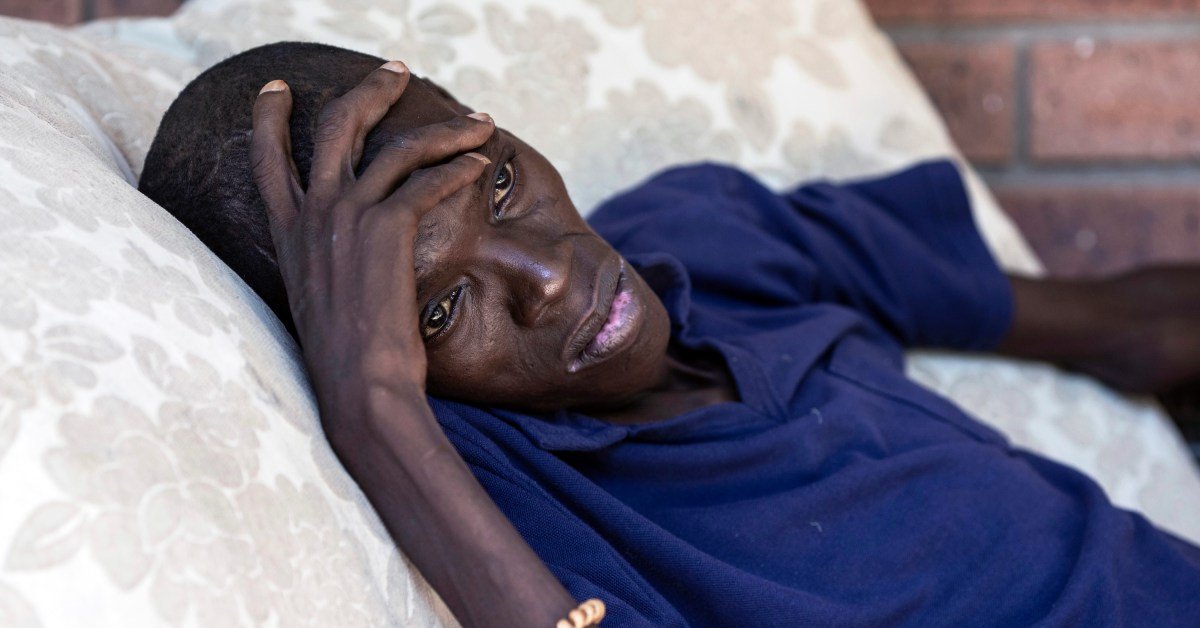
One summer morning, Win Kaari, a clinician at Chogoria Hospital in rural Kenya, grabbed a sip of tea between seeing patients who were lined up on outdoor benches. She thanked a friend for buying her chapati bread to go with her tea—the friend used to work with Kaari caring for HIV patients, but after US funding cuts, she was moved to the hospital’s customer service department.
Kaari’s HIV patients must wait longer for appointments now, because Kaari is also seeing patients with diabetes, high blood pressure, and other ailments. The hospital absorbed what was a separate US-funded HIV clinic into its general outpatient clinic. It was an adjustment to staff cuts but also a way to ensure HIV patients could continue receiving care if the US ever froze funding again, the way it did last year.
The HIV patients have seen another change: They have to pay a fee for appointments that used to be free.
It’s all part of how the hospital is making its system work with declining funding from the President’s Emergency Plan for AIDS Relief (PEPFAR), a celebrated US global health program that’s now being restructured amid the Trump administration’s retreat from foreign aid.
CT visited several Christian hospitals and clinics in sub-Saharan Africa this summer to see how the steepest foreign aid cuts in decades are affecting these institutions and how they are adapting. Overall, according to the United Nations, foreign aid for HIV fell 18 percent last year, reaching its lowest level in almost 20 years. Another analysis estimated a 25 percent drop.
In a remote part of Zambia, Macha Mission Hospital still tests its HIV patients for CD4 counts, or white blood cells. But it no longer tests for viral load, which used to be standard. Viral load shows how much HIV is in a person’s system; a low viral load indicates medication is working.
“We’re trying to reduce costs as much as we can,” said Macha clinician Sydney Gutichilala.
Chreso Ministries, an early faith-based PEPFAR partner that serves more than 16,000 HIV patients in Zambia, was operating without US funding when I visited its Lusaka clinic. The last money the ministry received from the United States was in March, and it hadn’t heard if the funding would be renewed. It, like many health care providers in the region, is operating on a month-to-month basis as the US government reconfigures foreign aid.
A clinician I met at Chreso’s HIV clinic, Pascal Kaoma, was skipping meals because he had been working without pay.
“It’s been rough,” said Fredrick Chitangala, the head of Chreso who was working for the ministry when it began receiving PEPFAR grants in 2004. He became director the same day that President Donald Trump froze foreign aid last year. “I saw the beginning,” Chitangala said, “and I’m seeing the coming to an end of the money that saved a lot of people.”
The administration’s new HIV strategy emphasizes winding down US involvement, part of the overall “America First” global health strategy. The United States has already announced a plan to end PEPFAR entirely in South Africa, where 8 million people live with HIV. The goal with PEPFAR all along was to bring HIV under epidemic control and wind the program down.
Doctors and hospital administrators in Africa debate whether the short-term pain from the cuts would result in long-term gain: less dependence on the United States and more national ownership. The danger is that in the transition, health systems lose the years of progress they’ve made against HIV.
Since the cuts, the number of people beginning HIV treatment is down significantly, according to a report from the Clinton Health Access Initiative—as are testing, prevention, community outreach, and training of health workers. Testing is a key part of the strategy to end HIV, by making sure the virus is contained and curtailed.
Training health workers is important because HIV requires specialized care for patients on medication over many decades, which can be updated with new scientific breakthroughs.
Kijabe Mission Hospital, a major teaching hospital in Kenya, trained 300 workers in HIV and tuberculosis care in 2024 with US support. Last year the hospital trained 70 workers, according to the director of education and research there, Arianna Shirk. This year, the hospital is on back on track for 2024 numbers. It’s had help from a foundation, African Mission Healthcare, and has found ways to offer training more cheaply.
On the treatment side, Kijabe decided to temporarily absorb the cost of fees for HIV and tuberculosis patients. Even so, the hospital has seen a significant drop in HIV patients, Shirk said.
The United States is still supplying HIV drugs after the initial disruption when the Trump administration issued a stop-work order on all aid in 2025. State Department data earlier this year showed about the same number of adults are on antiretrovirals (ARVs), the lifelong drugs to keep HIV at bay, as the year prior to the cuts.
“The one thing that I think we are not ready to be taken away is the drug supply, because that one, we don’t even know how to navigate it,” said Elijah Mwaura, the CEO of Chogoria Hospital. The hospital serves a rural, poor area, where people sell maize and spring onions along the road and many farm tea and coffee.
Chogoria has lost half its US government funding for its HIV program. When I visited, the program had just come to the end of a three-month tranche of funding and had received an extension in funding until September, leaving staff in tension and uncertainty.
In Zambia, the Christian Health Association of Zambia (CHAZ) lost $8.5 million in the funding cuts, according to Karen Sichinga, who leads the umbrella organization for faith-based institutions that provide 30 percent of the country’s health care. CHAZ had to cut staff at mission hospitals—in particular, employees who tracked money and results.
Sichinga is concerned that in all the turmoil of change, the “momentum” to fight HIV will be lost.
Under the new model for US global health funding, the administration is negotiating memoranda of understand with countries that receive aid. Zambia’s government is still working out the details on its agreement—which could mean that US aid money flows to the Zambian government, and then the Zambian government will decide how to fund HIV care.
Sichinga said if all the funding went through the Zambian government, her organization would “wait and wait and wait” to receive any funding.
But when she met with US representatives and asked about other ways to structure the funding, she said they told her to speak to her government about it.
“Our hands were tied,” Sichinga said.
It’s possible another source of support could reach organizations like CHAZ: a $2 billion funding pool for Christian organizations recently announced at the White House.
In Lusaka, Chreso’s ministry sits on a school campus tied to the Zambian church that started the HIV clinic. The clinic originated from churchgoers providing palliative care for fellow church members with HIV in the 1990s when drugs weren’t available. After the ministry established a clinic and won PEPFAR grants in 2004, it rapidly scaled up to tens of thousands of patients being served and opened sites around the country.
Chreso became Zambia’s caregiver for HIV patients in the country’s prisons, when that population previously had no such services, according to German missionary Helmut Reutter’s history of the Chreso program, The Chreso Story.
Now the ministry is scaling back. It shuttered one clinic last year. The ministry’s leaders are looking for other ways to support its medical work—taking on research contracts, for example.
“Is the government of Zambia ready to absorb 16,000 patients? They are not ready to absorb that number yet,” said Chitangala, Chreso’s director.
***
In Kenya, at 5 a.m. on the morning that Kaari had chapati and tea, an HIV patient died.
The patient had arrived weeks earlier in the advanced stages of HIV and went straight to the ICU. The doctors weren’t sure what led to her rapid decline; Kaari said they didn’t have the funds they would have had before to test and work up the woman’s medical history. But the death hit doctors’ morale hard—losing a patient to HIV here is much more unusual than it was 23 years ago, when PEPFAR was just beginning.
“We were, up until early last year, 7–10 years out from finishing the HIV fight,” said Doug Fountain, who leads Christians Connections in Health, a network of global Christian health institutions like Chreso. Now he’s not so sure the end of HIV is 10 years away.
In 2025, African leaders convened in Accra for the “Accra Reset,” to address their nations’ “vulnerability” to the shocks of funding changes for health.
African leaders want to figure out their own systems, Fountain said, which is a good thing. But “what people are living with right now is chaos on the ground,” he added. “All of our members have lost a lot.”
