
Pastor Anwar Hossain often travels an hour’s drive from his home in Dhaka, the Bangladesh capital, to his native village to catch up with family and friends. When he last visited in April, his trip had a more pressing purpose: to comfort families devastated by the loss of their children to measles.
Upon reaching Sreepur Upazila in Gazipur district, Hossain met with a family mourning the loss of the youngest of their three children, a baby who was hospitalized for a week before dying. Then Hossain sat with a grieving couple who had recently lost their only child, nearly 2 years old, to the virus.
“I went there to console them and pray with them,” said Hossain, executive director of the Christian nonprofit HEED (Health, Education and Economic Development) Bangladesh. “But what I saw there made me realize how serious the situation has become.”
He then returned to Dhaka, where the unfolding crisis demanded his attention. Since mid-March, Bangladesh has battled a nationwide measles outbreak largely stemming from the disruption in the routine vaccination schedules for children and the shortage of supplies. Latest official figures put the total number of cases so far this year at 80,104, with 628 deaths.
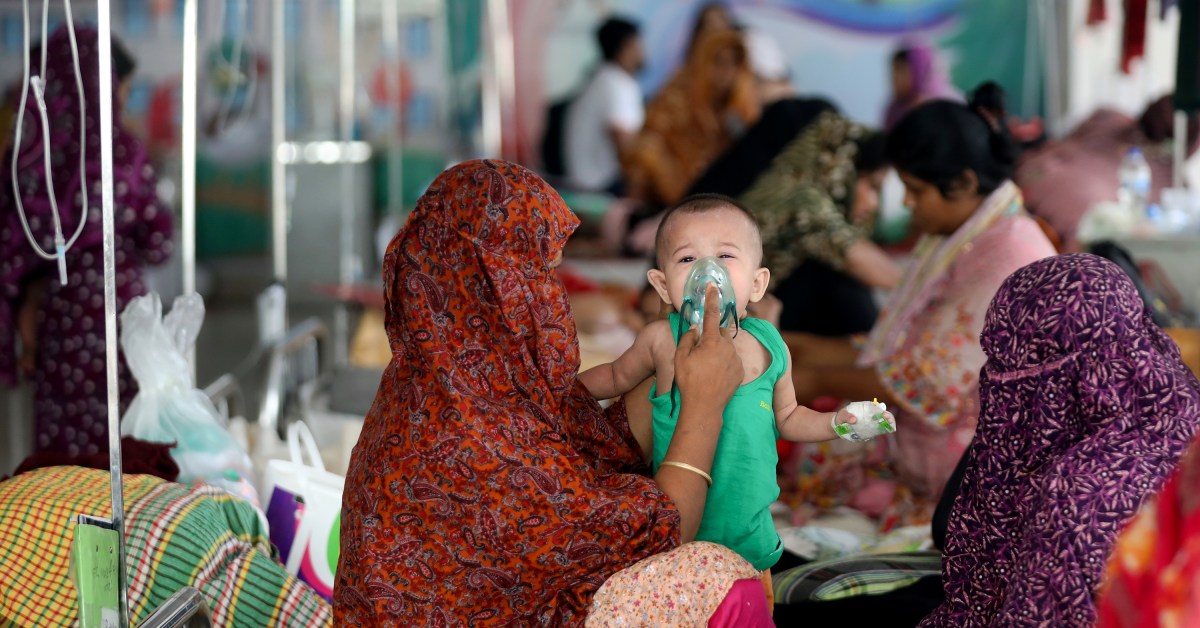
The government launched an emergency measles campaign in April, but the number of infections and deaths continues to soar. Densely populated settlements in the cities of Dhaka, Rajshahi, Chattogram, and Khulna report significant outbreaks. Photos from the worst-hit areas depict the scale of the epidemic: harried parents holding their children in overcrowded hospitals, sometimes sitting on floors when beds and isolation facilities run out of room.
Christians comprise less than 1 percent of Bangladesh’s 178 million people, but churches and Christian organizations play an outsize role in battling the outbreak by coordinating medical aid, counseling families, raising awareness, and organizing prayer support in suffering communities.
In the last two months, Hossain said HEED has arranged ambulances to take 12 children with suspected measles infections to Dhaka hospitals with their families. Meanwhile, mission hospitals and church-affiliated health facilities across the country have joined government efforts to stem the outbreak. A hospital run by the Christian organization LAMB in northwest Bangladesh’s Dinajpur district provides measles vaccines from its own stock to address shortages at nearby government dispensaries and step up the vaccination drive, a hospital staffer told CT on the condition of anonymity.
Measles can affect anyone, but can cause serious complications in children under age 5. It is twice as contagious as COVID-19 and chickenpox. Measles is often mistaken for common illnesses that share the same early symptoms: fever, cough, runny nose, and red, watery eyes. The familiar red rash usually appears about two weeks after exposure, but those carrying the virus can transmit it to others before the rash surfaces.
Bangladesh’s public health experts have described the situation as “unprecedented and explosive.” Before the current outbreak, Bangladesh drew international praise for its childhood immunization standards and its successes in maternal and child health outcomes. Disruptions since COVID-19, coupled with the political uprising in August 2024 that ultimately toppled former prime minister Sheikh Hasina’s government, dramatically changed the situation.
An interim administration reportedly halted the measles-rubella vaccine procurement usually done through UNICEF in favor of an open-tender process. Vaccination supplies fell drastically, and the government canceled an attempt to make up the shortfall. Under Bangladesh’s immunization schedule, children should receive two doses of the measles vaccine—the first at 9 months, the second at 15 months.
Between 2019 and 2023, the coverage for the first dose fell from 88.6 percent to 86 percent. The coverage for the second dose saw a further decline from 89 percent to 80.7 percent in the same period. According to Kabirul Bashar, a medical entomologist known for his expertise in insect-borne diseases such as malaria, “at least 95 percent of children” require two vaccine doses “to achieve herd immunity.”
Amid the vaccine coverage, church leaders who spoke to CT said congregations are taking precautions to contain the spread of infection. They are conducting Sunday schools, worship services, and other church gatherings in accordance with official public health guidelines by managing crowds and attendance of those exhibiting symptoms.
Christian charities that operate schools and afterschool learning centers have stepped up preventive measures as schools reopen this month following a seasonal break. For example, Hope Centers, afterschool centers run by the Bangladesh Assemblies of God, have strengthened routine medical screening for the 5,000 children they serve. Administrators at the 44 Hope Centers across the country use weekly “courtyard meetings” with parents to promote vaccination, educate families about symptoms, and encourage prompt medical care when they suspect infection.
“All Assemblies of God churches and Hope Centers have also been holding special prayers,” said Asa M. Kain, chairman and general superintendent of Bangladesh Assemblies of God Church. “We are vigilant and stand with families suffering as Bangladesh collectively tackles this crisis.”
Similarly, the Roman Catholic Church in Bangladesh—which operates five major hospitals and 80 medical clinics—treats infected patients and administers vaccines. The church and affiliates such as Caritas Bangladesh and Holy Cross Sisters have expanded their vaccination efforts to schools and community centers.
Catholic dispensaries and health care centers in rural areas conduct awareness campaigns to educate parents of young children about isolation practices, appropriate medical care post-infection, and access to immunization services. In areas lacking medical facilities, they arrange transportation for affected families to large urban hospitals.
Bangladesh’s outbreak coincides with a global resurgence of measles. Tens of thousands of cases have arisen in recent years in Ethiopia, the Democratic Republic of Congo, Iraq, and Kazakhstan. Canada lost its measles elimination status last year, and the United States might not be far behind. The United States, which declared measles eliminated in 2000, recorded 2,288 cases in 2025—the highest annual total since 1991. As of June 11, the US Centers for Disease Control and Prevention confirmed 2,073 cases so far this year.
Bangladeshi church leaders said the key to heading off the crisis requires immediate outreach to vulnerable communities. The leaders believe this is exactly where church-run organizations, particularly in rural and remote areas, can make a difference.
“Christian nonprofits are reaching those areas and communities that even government facilities cannot reach,” Hossain said.
