
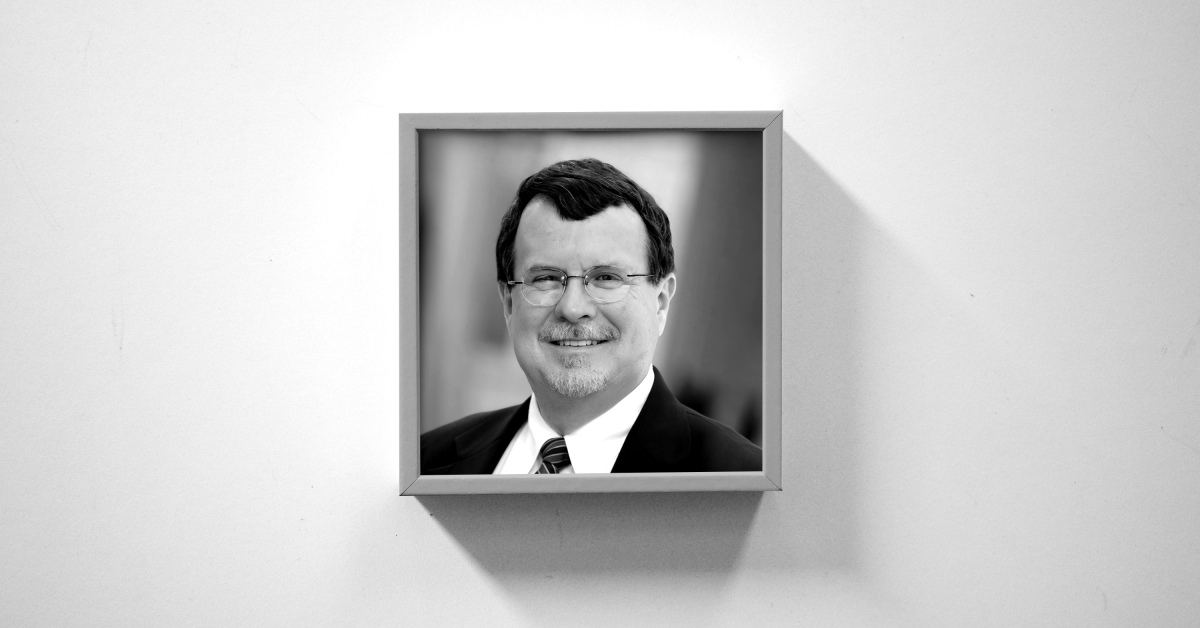
Bryant Myers passed away on August 15 after many years of helping Christian relief and development organizations, seminaries, churches, and practitioners see poverty and the people experiencing it in new ways. He worked in both the practical setting of World Vision and the academic world at Fuller Theological Seminary.
What stands out to me is his way of encouraging people to think differently. I was lucky to work, collaborate, and travel with Bryant. These experiences showed me how he listened, how he responded to unfinished ideas, and how he respected different viewpoints without losing patience.
When the topic was development, he always brought the focus back to people—their dignity, agency, relationships, faith, hope—and the real changes happening in their lives.
His best-known book, Walking with the Poor: Principles and Practices of Transformational Development, was first published in 1999, with a revised edition in 2011. It became influential because it brought together international development practice, the experience of Christian nonprofits, and theological reflection on what transformation means.
I remember the book as a reflection of who he was. Walking means relationship, patience, accompaniment, and humility. It is not about fixing, managing, or arriving with a set answer. Those of us who had the chance to walk alongside Bryant learned something valuable. Transformation is not something we give to others. We are changed as well.
His work covered topics like world mission, globalization, and health. Despite the range of subjects, the same theme runs through his work: how Christians should understand their neighbors, calling, power, and responsibility to join in God’s work of restoration.
Bryant worked at World Vision International for over 30 years. He held senior leadership roles, and his experience was hands-on, shaped by years spent within the realities of Christian relief and development.
He saw how development organizations can become skilled at managing programs but lose sight of the people they are meant to serve. Strategies turn into plans, plans into budgets, budgets into activities, and activities into indicators.
Bryant wanted practitioners to see the person behind each indicator and the community behind every project. He argued that people in poverty have knowledge, relationships, resilience, aspirations, spiritual life, and agency. Ignoring these aspects in development could worsen power imbalances.
In 2006, Bryant became a professor of transformational development at Fuller Theological Seminary’s School of Intercultural Studies, and he later became a senior professor. He brought years of field experience into the classroom. He served as a bridge between generations of practitioners; those shaped by earlier development movements, and those preparing for a rapidly changing world.
His writing reflected this same integration. He described transformational development as seeking positive change in every part of life: material, social, psychological, and spiritual. He questioned the idea that the spiritual and the physical could be separated.
For Bryant, Christian witness was shown in words and in how we live and treat others. Listening, honesty, and dignity all mattered. The way an organization used its power reflected the God it claimed to represent.
Bryant’s most lasting contribution was his belief that poverty is relational and holistic. It is not just a lack of income, food, shelter, or opportunity. It also involves broken relationships with God, ourselves, each other, and creation.
Today, this idea seems common, but it wasn’t when Bryant first developed it. Christian organizations faced a real challenge. Could they pursue justice and material well-being without losing their Christian identity? Could they share the gospel without making people’s physical and social needs seem less important? Bryant rejected this false choice. He argued that Christian witness is shown through life, word, and action together.
This view also changed how he saw practitioners’ role. Communities where they worked had knowledge, agency, and strengths. Practitioners needed humility to learn from them.
Bryant insisted transformation must go both ways. Those who serve must also be open to being changed by the people they serve. A transformer needs to be transformed before he or she does the work of transformation.
That idea has stayed with me. Organizations may talk about empowerment but still control how to define problems, choose solutions, and evaluate success. Bryant encouraged us to be more humble. If people in poverty really have dignity and agency, they should help define what transformation means. And if transformation includes identity, relationships, agency, and hope, our ways of evaluating must listen for those things too, not just what is easiest to measure.
Once, Bryant asked how many days a year I traveled. I told him about 150. He paused and then said something I have never forgotten: If something happened to me, the organization could replace me in weeks, but my wife could never find another Subodh, and my children could never have another father. He said it simply, without a lecture. He was reminding me that our mission should not make us neglect those closest to us. Organizations measure what we contribute, but families feel our presence. Those are not the same.
Bryant leaves behind his family, including his wife, Lisa, and an impressive body of work. His greatest legacy is the people he influenced: students who learned to connect theology and practice, practitioners who learned to see people as partners, and friends and colleagues who, like me, still remember their conversations with him.
I do not want to remember Bryant only as the author of Walking with the Poor, a former World Vision executive, or a Fuller professor. Those titles are important, but they do not capture who he was. I remember someone who believed people were more than problems to solve, a teacher who connected faith and evidence, a practitioner who thought those who serve should also be open to change, and a friend who reminded me my family needed me.
Maybe that is what walking with the poor taught Bryant—and what he taught many of us. Transformation is about relationships. We cannot expect others to change while staying the same ourselves. And we cannot truly serve people if we do not see their dignity, agency, knowledge, and God-given abilities.
Bryant taught us to slow down, listen carefully, ask better questions, and look more deeply. I am grateful I had the chance to walk with him, learn from him, travel with him, and be changed by him. His books will continue to be read, his ideas will keep shaping Christian development, and his students will keep teaching. But for me, his legacy is personal. It shapes how I think about poverty, evidence, transformation, and stewardship. Most of all, it reminds me what it means to give your life to a mission without forgetting those closest to you.
For that and so much more, I will always be grateful.
