
Athletes from the tiniest country to ever qualify for the World Cup are using their newfound visibility to pray.
In a World Cup that has seen quite a few displays of faith from players, Curaçao’s team has emerged as one of the most outspoken, and local pastors are hopeful the team’s example will reach the next generation of Christians on the small Caribbean island.
Before leaving for the World Cup, the Curaçao national team held a public worship session with Presence Revival, a ministry based in the Netherlands. Videos of the team singing “Jireh” and “Goodness of God” circulated across social media and gained hundreds of thousands of views. Forward Kenji Gorre shared his testimony: “People are dealing with serious things, and one thing that I know to be true is that Jesus is the one who can really fill you.”
The team gathers in a circle to pray before every practice and game, a ritual previously led by the team’s late goalkeeper Jairzinho Pieter. Now team captain Leandro Bacuna leads the prayer.
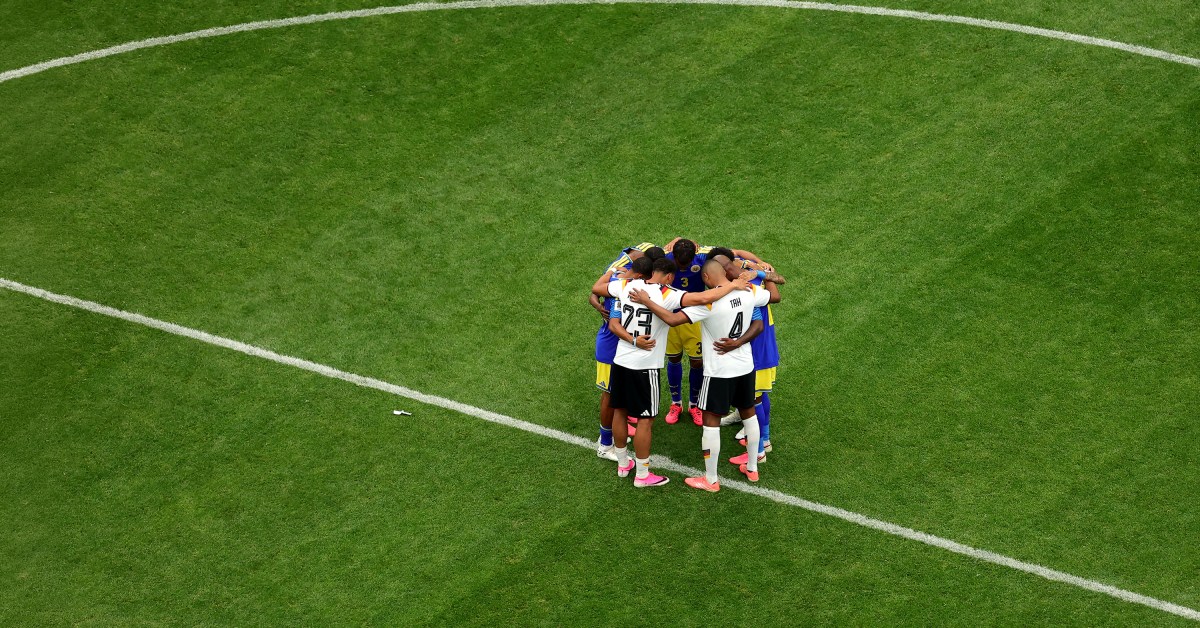
In a viral moment after their first match, a 7–1 loss to Germany, Curaçao players prayed with members of the German team. Teams have been known to pray among themselves, but it is rare for opposing teams to pray together.
Felix Nmecha, the German midfielder and an outspoken Christian, said of the moment, “We are during the game opponents against each other and then after the game, we’re all Christians and we’re brothers. … In our faith, we all believe that Jesus is glorified through the game. And that’s why we came together and simply prayed together.”
After their draw the next Saturday against Ecuador, where goalie Eloy Room kept Curaçao in the tournament with a near-historic number of saves, Curaçao players prayed again with opposing players, including Chelsea midfielder Moises Caicedo.
Curaçao, an island 40 miles off Venezuela, has a population of 158,000 and a land size of 171 square miles (barely a sixth the size of Rhode Island). It became an independent nation in 2010 but remains part of the Kingdom of the Netherlands. Most residents speak four languages: Dutch, English, Spanish, and Papiamentu, the local dialect. The island is known for its crystal-clear water, colorful architecture, and vibrant coastal culture—which fans and players have brought to the host countries of the World Cup. All but one of the 26 players on the roster grew up in the Netherlands, but having parents or grandparents from the island qualifies them to play for the national team.
When Curaçao qualified for the World Cup in November, the entire island celebrated. The government gave a half day off work, and fans lined the roads from the airport to the capital city of Willemstad. The team parade was supposed to last two hours and instead lasted six, said pastor Tim Southerland of International Church Curaçao. The players wore T-shirts bearing a popular Papiamentu catchphrase: “Dios Dilanti, Korsou su tras” (“God at the front, Curaçao behind him”).
Spanish colonizers brought Catholicism to Curaçao in the 1500s before the Dutch seized the island in 1634 and introduced Protestantism. The first Protestant church, built in 1769, is still in use today. Today, Curaçao’s religious demographics mirror the rest of Latin America’s: Roman Catholics make up 68 percent of the population, and Protestants account for 13.5 percent.
Yet the island is losing young people, as many leave Curaçao to pursue higher education or job opportunities. Youth flight has led to difficulties growing churches, pastors say. Additionally, surveys and census figures indicate a substantial increase in the percent of religiously unaffiliated people in Latin America and the Caribbean in the past decade, especially among young people. This shift, while potentially influenced by increasing secularism, appears in part to stem from disillusionment with organized religion. Curaçaoan pastors said they hope the team’s example will help combat this trend on the island.
“What’s happening is that it wasn’t just [the] World Cup coming in, but the islanders seeing young men, young people who are not only great in what they’re doing, but they’re following Jesus and they’re very open about it,” Southerland said. “They’re not ashamed. And that’s sending a huge message to the island.”
Southerland said he sees a tendency among Christians to compartmentalize faith from the rest of their lives, thinking that “the church is over here and the rest of the world’s over here.” But the team has made it clear that faith shows up in all parts of life.
And the players aren’t the only ones praying. Pastor Christopher Guillen of U-Turn 2 New Life Church in Willemstad emailed congregants and asked everybody to wear blue, the team’s color, on the Sunday that Curaçao faced off against Germany. They began the service with worship, followed by prayer, thanking God for the team and asking him to protect the players and their witness.
Guillen said that in Curaçao, the wider church’s biggest struggle is reaching—and retaining—the next generation. The loss of young people hurts their ability to maintain worship teams and young adult ministries.
But he sees the influence the World Cup team has had on young people—his nephew’s 7-year-old son wakes up at 5 a.m. daily to practice soccer—and believes the players’ commitment to prayer is demonstrating the importance of a personal relationship with Jesus Christ.
“The only way one’s heart can be transformed is through the Lord Jesus Christ,” Guillen said. “And I believe this team is showing that. They’re showing it on the field; they’re showing it off the field.”
Pastor Raimy Juliet leads Iglesia House of Worship, one of Curaçao’s largest churches. The church runs four schools and two radio stations and sends missionaries to Haiti, Colombia, Venezuela, and the Netherlands.
He expects to see the team’s outward faith have a greater impact on the island in the next few weeks—especially among youth, Christian and non-Christian alike.
“Everywhere they go, prayer is something very important for [the national team],” Juliet said. “And the young people, when they see those things, they will be encouraged also to be Christian.”
Juliet’s daughter, Alice, is studying linguistics and Bible translation in Canada. She was at the team’s first match in Houston and said the emotions hit hard the moment Curaçao’s flag was unfurled on the field. Tears streamed down fans’ faces as they sang the national anthem.
“It felt like a moment where God was saying ‘You matter,’” she said. “‘You’re a small country, but you matter, and it doesn’t matter how small you are … the Lord can take you anywhere.’”
Alice Juliet said she was particularly moved when she saw the team pray before the match and afterward, when she saw them pray with the German players.
“It was beautiful,” she said. “I was very emotional at the end seeing [the prayer] and just also seeing our team being happy. They were happy and joyful even though they lost.”
She said she prays every day for revival on the island, for the government, and for influential people to know Christ. Since the World Cup started, she said, people across the island have been united in prayer: “I do believe that the national team being so open about their faith does bring people to that understanding of ‘I can live out my faith all the time, everywhere, anywhere.’”
