
In late June, when the Supreme Court allowed the Trump administration to terminate legal status for roughly 300,000 Haitian immigrants, Haitians repeated what they have been saying for years: Returning to their gang-ravaged homeland, where many of their old neighborhoods have become wastelands of kidnapping and sexual violence and murder, could be a death sentence.
The government does not really dispute this. The State Department’s website urges travelers to avoid Haiti “for any reason.” The administration is deporting Haitians anyway.
The hardening of America’s heart toward Haitians has been remarkably public. President Donald Trump, for instance, has never hidden his feelings. Last year, he doubled down on his 2018 comments that Haiti belongs to a class of “s—hole countries.”
The enduring lowlight of recent years, though, is September 2024, when vice presidential candidate JD Vance seized upon a Facebook post claiming that Haitians in Springfield, Ohio, butchered a pet cat strung from a tree. Vance and others amplified the tale, repackaging it in press releases and racist memes. Trump repeated it in a televised presidential debate.
Springfield officials swiftly debunked the outlandish story, its originators confessing that it was baseless. Vance shrugged off the falsehood. “If I have to create stories so that the American media actually pays attention,” he said, “then that’s what I’m going to do.” Many Christians were appalled to see Vance, an outspoken Catholic, bearing false witness against vulnerable people from one of the world’s most dangerous countries.
But we’ve been bearing false witness about Haiti for generations. When I worked in Haiti in the early 2000s, as a journalist and then with an evangelical aid organization, I heard another tale amplified: Haiti suffers because its founding fathers made a pact with Satan.
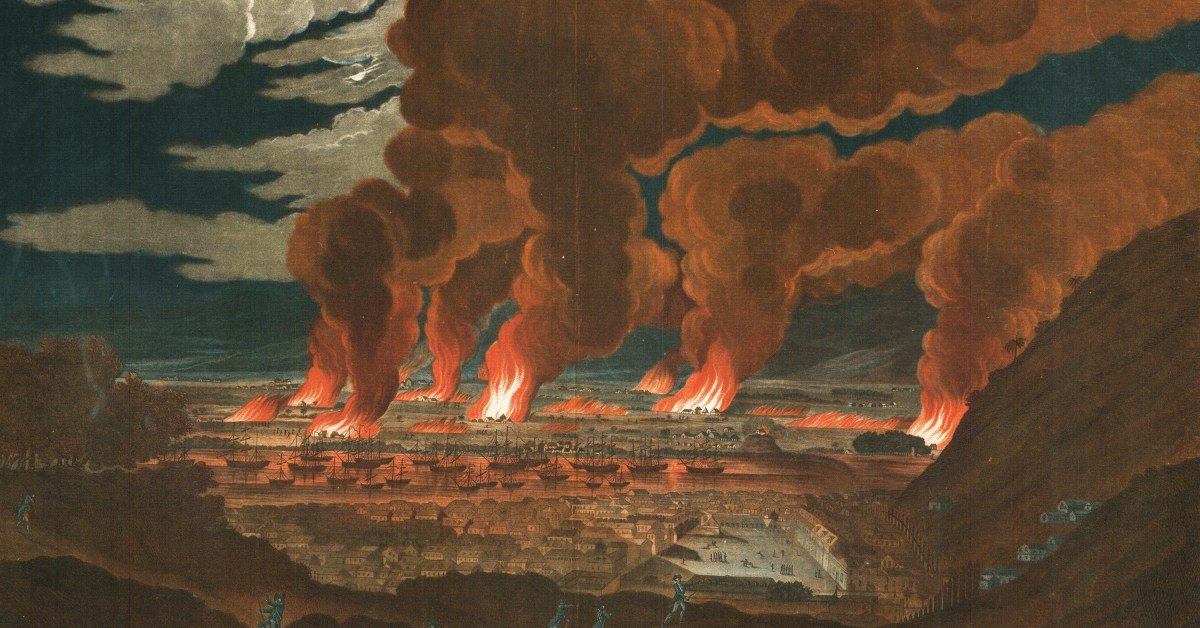
Haitians have one of the world’s proudest national origin stories. In 1804, enslaved Africans overthrew their French masters to gain their freedom, forming the Western Hemisphere’s second independent republic, after the US. But in the version I heard often, this history is tainted: Haiti’s revolution, goes the tale, was birthed one stormy night in a secret meeting where rebel leaders sacrificed a pig and pledged themselves to the Devil in exchange for military success. Haitians have been cursed ever since.
Variations on this claim circulated for decades, not only among American missionaries and short-term volunteers—few of whom remain in Haiti today—but also among some Haitians. A Baptist pastor made it a plank in his campaign for Haiti’s presidency in 2005. Though many evangelicals dismissed the story, it has been repeated on social media, in missionary biographies, and in fundraising appeals. Pat Robertson drew global attention to the tale a day after the 2010 earthquake that killed more than 100,000 people. “They got together and swore a pact to the Devil,” the late broadcaster shared on his show, The 700 Club.
To be sure, a 1791 secret meeting of hundreds of slaves, near today’s city of Cap-Haïtien, is considered the symbolic beginning of Haiti’s revolution. Many histories place two Vodou leaders at the scene and tell of a porcine sacrifice, though Vodou was not yet a formalized religion as it is today. But the ceremony is shrouded in mystery. No eyewitness accounts exist. Some scholars argue it is a myth.
Years ago, while conducting research for a forthcoming novel, I spent days combing books and newspaper archives to trace the origin of the Devil-pact myth, to no avail. The earliest texts describing the meeting were published decades afterward, and none mention the Prince of Darkness—though one history records a speech invoking the “God who made the sun, who brings us light.”
The Faustian bargain story, some Haitians note, is not only unfounded but theologically silly. Was slavery a God-ordained institution, such that Haitians could only escape it through a hell-made back door?
White portrayals of unfamiliar religions as satanic aren’t new; they date to the Age of Discovery. In the late 15th century, after Columbus’s second voyage, Spanish chronicler Andrés Bernáldez described animal-shaped objects brought from the New World as evidence that its inhabitants “regarded the Devil as their lord.”
But the leap from mislabeling a faith to alleging a national treaty with Lucifer requires real effort. Some Africana scholars suggest US Marines cooked up the idea when they occupied Haiti for two decades beginning in 1915. But newspaper records don’t support this theory. One of the earliest hints appeared in 1975, when Hubert Turnbull, a Methodist missionary kid who grew up in Haiti, told a reporter that he dabbled in the “positive aspects” of Vodou but tried not to “go too far,” which “involves signing a pact with the devil.”
The tale morphed as it spread, like a game of telephone. In 1992, missionary Terry Nelson told the Richmond Times-Dispatch he had information that the satanic pact was good for only 200 years and thus had expired. “The Devil’s contract’s up,” Nelson said. “We’re free to preach the gospel.”
Five years later, however, a coalition of Baptist leaders was still holding rallies in Haiti and South Florida to pray for God to release the country from its infernal agreement. “The devil gave them their independence. He took away everything else,” organizer Paul Clerie told a reporter in Fort Lauderdale in 1997. “Haiti’s going to see a new day dawning.” Haitians are still waiting for that dawn.
We may never know where the myth of the Devil pact started, but we can choose where it ends. I always understood the story’s appeal: It offered a ready framework for grappling with Haiti’s long and dispiriting run of setbacks. It juiced up the urgency of missions efforts.
But the gospel is not served by untruths, and Haitians have suffered enough from rumors. Surely the unvarnished reality of our moment—a city-sized population neither safe in their country nor welcome in the one where they sought refuge—is urgent enough to examine our faulty narratives and ask how Jesus would want us to respond.
